Showing posts with label today news. Show all posts

Wednesday, April 27, 2011

Sathya Sai Baba's last rites in Puttaparthi today

Sathya Sai BabaPUTTAPARTHI: While Prashanthi Nilayam looked like an ocean of humanity in which devotees flowed from all directions on Tuesday, hectic preparations were on for the 'maha samadhi' ofSathya Sai Baba on Wednesday at the Sai Kulwant Hall in Prashanthi Nilayam premises. 
Number 9 was Sathya Sai Baba's favourite and lucky number. When the clock strikes 9 in the morning, the final rituals will start and conclude by 10.30am. 

Sai Kulwant Hall is the place where Baba sat, delivered discourses and blessed people. According to the ashramites, many years ago, while interacting with the students, he had shown the place and expressed his wish that he should be buried in the Sai Kulwant Hall. 

Baba would be laid to rest in the pit (7ft deep and 12ft length), which was dug up 10ft behind from where his body was placed in the glass casket in the hall since Sunday evening. 

"The body would be lowered in the pit and filled with 'Kuruskshetra' matti (soil), salt, silver, gold and navaratnas," sources said. The body would be kept in the sleeping position in the samadhi. 

However, Prasanthi Nilayam would be out of bounds for devotees during the maha samadhi. Only key family members and Sai Central Trust members would take part in the last rites. The construction of a memorial and fixing of a golden statue of Baba would be planned in a few days time. Though Baba preached universal brotherhood and embraced all religions, his last rites will be performed as per the Hindu tradition.

Wednesday, April 20, 2011

'Rani's item number for Housefull 2'

Rani MukerjiFor the first time in her career, Rani Mukerji will do a hot disco number 

Rani Mukerji is certainly having fun. On the one hand, she has delivered a hard-hitting performance in her last film and on the other, she is gearing up for some matkas and jhatkas in the Housefull sequel. 

Yes, for the first time in her career, the actress will be seen in an item song. Even though she is a fantastic dancer, for some reason, she has stayed away from item songs so far in her career. However, she isn't ready to talk about it. A trained Odissi dancer, Rani says, "As of now, this is hearsay and I'd like to leave it at that. I have really not done an item number in my career, but I'm open to it. 

Doing it totally depends on how the song is being presented and if it excites me. I love dancing and I think such special songs have a lot of energy. It's fun to see and shoot." So will this number be choreographed by Vaibhavi Merchant, who is a close friend of Rani and has directed her dance moves in Bunty Aur Babli and Thoda Pyaar Thoda Magic? We'll keep you posted. 


Now Dadasaheb Phalke award for the actress 
After collecting every other award in the country for her performance in No One Killed Jessica, Rani will soon add the Dada Saheb Phalke Academy Award to her collection. She confirms, "I'm happy that people have loved my film and my work. I have always let my work do the talking and I guess I have proved to my critics that I'm not over. It's a great feeling to be back winning awards.

The past three years had been challenging because I didn't have box office success behind me. People forget the body of work, and the amount of blood and sweat that you put in for years and write you off, so I'm very happy to get this prestigious award."

Saturday, April 2, 2011

Scam effect: Course in biz ethics must at new IIMs

BANGALORE: After playing out in the courtrooms and boardrooms, some of India Inc's scams have crashed into the classrooms of the Indian Institutes of Management (IIMs). 

A slew of scams, including Satyam, 2G, Bhopal gas tragedy ( Dow Chemical Company) and their protagonists have become a talking point at the new IIMs. Business ethics and values will now be taught as a part of the flagship postgraduate programme in management. 

The newest IIM at Trichy, mentored by IIM-Bangalore, will introduce a full credit mandatory course in ethics, corporate social responsibility and values this summer for its maiden batch. ''India has always been known for its values and ethics. But things have changed in recent times. We believe each student passing out of the institute should act as change agents with socially responsive behaviour. During the interview stage, we are looking for qualities like ethical behaviour, integrity and spirit of inquiry among prospective students,'' said IIM-T director Prafulla Agnihotri. 

Aditya Somani, a first year student at IIM-Ranchi, recently completed a second term course in business ethics and values. He said, ''The course did not teach him how to be ethical per se but focused on ethical decision making. ''I remember the Bhopal tragedy case where we discussed what ought to be done and what happened in reality. Professors throw up situations and we discuss how to tackle them.'' 

Heads of some of the biggest corporate houses, who hold honorary positions at IIMs, had pitched for these courses. Tata Motors vice-chairman Ravi Kant, who is chairman, board of governors at IIM-Rohtak, suggested a re-jig of the curriculum to include ethical business practices and CSR. In the first board meeting of the B-school in June 2010, he stressed the need for ''sensitisation of budding managers on sustainable profit making in long-term perspective versus short-term profitability.''

Friday, April 1, 2011

Slower Indian population growth may benefit economy

India's population grew at its slowest pace since independence in the decade to 2011, the government said on Thursday, a trend welcomed by some since it may lead to higher living standards and sounder public finances in a country with enough young people.

Unlike the advanced countries of the West or even Russia and China, where ageing or shrinking populations have sparked worries about the impact on economic growth, India has long sought to bring down population growth to a level it can handle.

Its population, pegged by the Census of India at 1.21 billion at the beginning of 2011, has been a drag on economic growth, with successive governments unable to find the schools, jobs or food productivity to match the demographic bulge.

The growth of 17.6% from 2001, the last time Indians were counted, compared with 21.5% in the previous decade, the preliminary census report said.

"Reducing the growth rate is our objective. What we already have is a large youth population without enough schools or jobs for them," said Abusaleh Shariff, chief economist at the National Council for Applied Economic Research.

"It (the decline) reflects the desire of even poor people to educate their children and for a better life. They know that having too many children will be counter-productive," he said.

India stands in contrast to neighbouring China, which faces the prospect of not having enough young people to support a fast-ageing population.

Beijing's strict one-child policy has brought down annual population growth to under 1% and the rate is projected to turn negative in another three decades.

India's population is projected to overtake China's by 2025 and its large youth population means it can look forward to a demographic dividend that includes ample supply of labour, rising productivity and plenty of younger workers to fund the pensions of those who have retired.

A decline in population growth means India's national income may break out of the trend of increasing just ahead of population growth, potentially freeing millions of dollars the government now spends on welfare schemes.

The census report showed literacy had improved during the decade by 9.2 percentage points to 74%.

But the number of females per 1,000 males in the 0-6 age group fell to 914 from 927 during the past decade, pointing to the continued practice of selective abortions.

The census data will be used by governments to design welfare schemes and calculate what funds should be set aside for food and fuel subsidies.
India will also use the census to issue a unique identification number to all its citizens and to target beneficiaries for welfare schemes, which it hopes will provide better access to such schemes and help it trim its subsidy bill.

"In the long term, in terms of social-sector schemes, the burden on the government will be less. That is the straightforward conclusion," said NR Bhanumurthy, an economist at the National Institute of Public Finance and Policy, referring to the slowing population growth.

Wednesday, March 23, 2011

Bengal worse than Gujarat for Muslims?

NEW DELHI: These are figures the Left Frontshould be wary of as it prepares to defend its citadel of 34 years in West Bengal. 

An analysis of data on the Muslim community released by the chief economist of the National Council of Applied Economic Research, Abu Saleh Sheriff, reveals that the state's minority has benefited little from development measures. In terms of human development indices, the Muslims have fared very poorly. 

Of the 25.2% Muslim population, only 2.1% have government jobs and 50% children are out of school at the primary level. Only 12% go on to complete matriculation. These numbers are all the more astonishing given the fact that Left swears by its secular credentials and positions itself as a protector of minority rights. 

Alarm bells have already started ringing, especially after a postmortem of the Left's poor showing in the civic elections last year. An important factor which could have resulted in the dismal performance was Muslim disenchantment. In what may be viewed as the party's efforts to make amends, there is a steep 33% hike in the number of Muslim candidates fielded by Left Front. It has gone up from 42 in 2006 to 56 this time in the 292-member Assembly. 

Throughout his lecture, Sheriff — who has also been the member secretary of the Sachar panel — spoke of Gujarat and West Bengal in the same breath. In fact, he used the data to project the Left-ruled state in a far worse light than the state ruled by Narendra Modi, not regarded by many as a benefactor of the minorities. And this comparison appeared all the more relevant because the West Bengal government had gone out of its way to provide shelter to Qutubuddin Ansari, the man who became the face of the post-Godhra riots with his folded hands and tearful eyes. 

"If a substantial fraction of the state's 25% Muslim population have traditionally voted for the alliance it could be because of the projected gains of the land reforms even though if you look at the figures, it shows that these reforms do not seem to have made any significant difference to the living standards of the community. With the elections coming, it is time this reality is brought to the knowledge of the public," Sheriff said. He was addressing a seminar on "Relative development of West Bengal and Socio-Religious Differentials" organized by the Institute of Objective Studies at theIndia Islamic Cultural Cultural Centre. 

Shariff's figures on education, sourced, according to him from the census database and the Planning Commission, show 50% Muslim children attend school at the primary level, 26% remain in middle school and only 12% complete matriculation against 54%, 30% and 13% respectively for SC/STs and 80%, 58% and 38% for others. 

Of the 90 minority-concentrated districts in the country, West Bengal has 12. "The worst are the state government employment figures where even Gujarat with its 9.1% Muslim population and with a 5.4% share in jobs is way ahead of West Bengal which is by far the worst in the country. We had to try very hard to get these figures out from the state government because, for obvious reasons, they are very secretive about this," Shariff said.

Tuesday, March 22, 2011

Hasan Ali laundered money for 3 former Maharashtra CMs

Hawala trader Hasan Ali's $ 8 billion (about Rs 36,000 crore) network of illegal money transactions is unravelling.

On Saturday, Ali revealed to agencies probing his accounts that a substantial portion of the thousands of crores in his Swiss bank and other accounts elsewhere belonged to top Indian politicians and bureaucrats, including three former chief ministers of Maharashtra.

This breakthrough has come as a breather to the investigating agencies that have been at the receiving end of the courts for their lacklustre probe into Ali's case.

In what could place Ali at the centre of a devious parallel banking network for the country's most corrupt politicos and babus, investigators have found an ingenious money- laundering mechanism that succeeded in turning black money into legitimate earnings through the stock market.

Following these revelations from Ali, the investigators have summoned Indian representatives of international banks such as UBS, Barclays and Credit Suisse to share more information on his transactions with them.

According to probe agencies, Ali took unaccounted black money from Indian politicians out of the country through the hawala channel and parked them in bank accounts in various countries across the globe, especially Mauritius.

He would then bring this money back to India, invest it in the stock market through participatory notes to buy up shares for people named by the politicians. At times, the money would come in as foreign investment straight into companies floated by friends and family of these politicians.

"In those years, especially the late 1990s and early 2000s, the stock markets had huge black money riding on it, which was often untraceable. Ali smartly bought participatory notes which were not required to be registered with SEBI. In the same fashion, some of the money would also come into companies that would have a beneficiary of the politician's family or in some cases, a completely new business entity in the name of a beneficiary of the politician," said a source close to the probe agencies. Through this strategy, Ali is believed to have pumped in money into the businesses of the son-in-law of one of these former CMs.

Ali was remanded to four days' custody of the enforcement directorate (ED) on March 17. His custodial interrogation was extended by the Supreme Court by another three days.

Ali has told his interrogators that between 1990 to 2000, he got in touch with several top bureaucrats as well, who like the politicians wanted him to launder their ill-gotten wealth. "He says these introductions then became permanent contacts and he did launder money for them several times, also getting his own share of the profit from these transactions. However, he claims that he was just a small fish in the entire episode," said another official source.

Officials however are not yet ready to give out the names of the politicians, bureaucrats or bankers whose names Ali has allegedly revealed. They are piecing the hawala jigsaw together to crack the case before letting out the details of the network. Ali's claims of laundering black money for politicians and bureaucrats probably explain why no probe was initiated against him for a very long time.

According to sources, Ali has told investigators that he did not have any direct links with most politicians whose money he handled but were in fact introduced to them by his friends and partners in his hawala affairs.

Although he claims to be a small fish, the investigators are not willing to buy the claim. The ED has apparently sought explanation from Ali regarding the initial deposit of Rs 5 crore in his bank account with the UBS Bank, Singapore, in 1982, which mysteriously grew to US $1 billion (`4,500 crore at current conversion rates) in 1999, a year-and-a-half before the 9/11 attacks in the US.

"This aspect of his business is something we must look into as his close connections with Adnan Khashoggi, the international arms dealer, run very thick," says an official. Investigators probing the Pune businessman's accounts have found a phenomenal jump in his assets after 2001, with money coming in from 'suspicious' accounts from countries such as Dubai and Saudi Arabia, among others.

The date is significant because investigators believe that after the terror attacks in September 2001, the US and other countries had stopped transactions of money in different bank accounts related to terrorist organisations. Ali's account on the other hand just kept growing with money flowing in from many Middle Eastern countries. This has what raised eyebrows among the many investigating agencies.

" The money could have been routed to his account as other banks were being pressured to freeze accounts. This explains how the money in his account jumped from a few hundred crores to thousands of crores.

The alarming jump and the freezing of funds after the terror attack could not be a coincidence," said an investigator.

The Comptroller and Auditor General's report ( CAG report) indicates how Ali's income jumped from Rs 529 crore in 2001- 2002 to Rs 5,404 crore in 2002- 2003.

From here, it kept soaring as Rs 54,268.6 crore were accumulated in his account in 2006- 2007. Investigators believe that Ali's income did not match with the money coming in to his account.

" He has claimed to be a businessman, a stud farm owner and a scrap dealer. However, even if you do all this together you can't have so much money in your account," said the investigator. He said that Ali has not been able to explain where the money had come from.

" Forget about the thousands of crores. To date, Ali has not been able to explain the source of Rs 5 crore, which was the initial deposit in his UBS Bank account in Singapore in 1982. Apart from arms dealer Adnan Khashoggi, we believe he could be in touch with other sources too," said the officer.

It remains to be seen whether the ED would seriously investigate or simply ignore Ali's revelations as the agency has been unable to initiate any action since 2007 against the money- launderer, until the SC rapped the government on its knuckles. The ED's veil of secrecy on Ali's revelations also does not inspire confidence that it will pursue the hawala trail.

Monday, March 14, 2011

'Fake pilots' may have been conned themselves

NEW DELHI: Fake commanders who fudged marksheets to get to the captain's seat may have been conned themselves. Here's how: co-pilots failing the exam to become commanders are routinely approached by touts with the promise of having their papers "re-evaluated" for the pass mark required. 

And with the DGCA exam database being inaccessible to even its head office, verification is not possible at the time of submission. 

Pilots cough up between Rs 5 lakh and Rs 7 lakh (sometimes as a bank draft) for a package deal — real marksheets with no reds and a Directorate General of Civil Aviation (DGCA) licence for commandership. But what the commanders do not realize is that the middlemen may after all be handing them fake marksheets that will show up when checked with the original database. 

The double-con came to light when top aviation officials began probing licences on the directive of the Directorate General of Civil Aviation after a woman pilot repeatedly landing on the nosewheel was found to have forged a marksheet. "A number of industry people have told us middlemen involved in this racket ask the co-pilots to fill up forms for re-evaluation and even take bank drafts to make it look real," said an official connected with the probe. "They are learnt to ask for Rs 5-7 lakh for this task and then (for) getting a licence issued. Co-pilots see this as a foolproof way of doing an illegal thing." 

But what pushes co-pilots to acquire an airline transport pilot licence (ATPL) by fraudulent means, paying a huge "fee" to boot? "By the time a co-pilot is eligible to become commander in terms of number of hours flown, his or her monthly salary is about Rs 2 lakh," said an official. "On becoming commander, the salary doubles to Rs 4 lakh. If someone is not able to pass the ATPL exam, the monetary loss is a whopping Rs 24 lakh annually. So it makes economic sense for such people to pay Rs 5-7 lakh and become a commander as the cost will be recovered in just four months." 

What makes the job easier for the tout and his client alike is that the DGCA has no way of verifying the documents at the time of submission. Marksheets are issued to pilots from the Directorate General of Civil Aviation's central examination office in R K Puram, south Delhi. These have to be submitted, along with other documents, at the DGCA's head office opposite Safdarjung Airport. 

The head office cannot cross-check the documents against the Directorate General of Civil Aviation database because the exam office computers are not part of the intra-network. Not by accident, though. Exam records were kept delinked to prevent hackers from getting through — now working to the benefit of those forging their papers to fly millions across the country and abroad. 

Officials say checks will be put in place now, before licences are issued. "There were some cases where people submitted fake education degrees and we started verifying them with the universities. Now, we are devising way to cross-check the marksheets submitted for issuance of licences with original records. This will be done even if it means a delay of a couple of days in the licence process," said a senior official.

Saturday, March 12, 2011

India to have 'Wagah in the East' now

New Delhi: The country will soon have a 'Wagah in the East' along the Bangladesh border where troops of both countries, dressed in full regalia, will perform the retreat-- ceremonial lowering of flags -- similar to the tradition prevalent along the Indo-Pakistan border. 

The decision was taken during the five-day joint coordination meeting of border forces of India and Bangladesh here. 

"We have taken some new decisions. Something apart the usual beaten track.... We have a joint retreat ceremony at Attari Wagah border where the Pakistani forces and BSF join together in the retreat ceremony lowering the flags. 

"We have decided in-principle to have a similar joint retreat ceremony at the Petraploe border (along Bangladesh frontier)," BSF Director General Raman Srivastava told reporters here on the conclusion of the joint border talks with the Border Guards Bangladesh (BGB).

The two sides will be examining whether such ceremonies, which they hope will be symbolic of the "good relations" between them, are possible at Akhora and Phoolbani too. 

"We have decided to set up a joint committee to explore the modalities methodologies and the other relevant issues of this ceremony and hopefully within a couple of months we should be able to start such a ceremony after working out the modalities," he said. 

"We hope the ceremony will be even more beautiful and more congenial than the ceremony at Attari and Wagah. In due course of time, it will become a major tourist attraction like the Attari Wagah ceremony," the BSF DG said. 

The force, according to a senior BSF officer, would also deploy its recently inducted women personnel to carry out the ceremonies at this frontier. 

India and Pakistan have been traditionally hosting the flag lowering ceremonies at the Wagah Attari border for many years now and the event is attended by a huge number of people from both the countries as well as foreigner nationals. 

Greetings and gifts are exchanged by officials at this frontier during national festivals like Independence Day, Republic Day and festivals like Diwali, Holi and Eid. 

The BGB delegation, till recently known as the Bangladesh Rifles (BDR), was led by it's Director General Major General Rafiqul Islam.

Friday, March 11, 2011

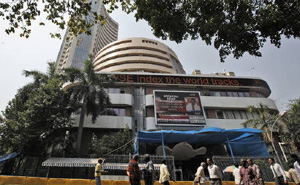
Sensex extends losses, down by over 127 points on funds selling

Mumbai: The Bombay Stock Exchange benchmark Sensex fell by over 127 points in opening trade Friday on continued selling by foreign funds amid a subdued trend in global markets over weak US economic data and unrest in Saudi Arabia.

The 30-share barometer, which lost 141.97 points in the previous session, lost another 127.61 points, or 0.69 percent, to 18,200.37 points on Friday, with metals, IT and capital goods stocks leading the fall.

In a similar fashion, the wide-based National Stock Exchange Nifty index moved down 43.80 points, or 0.79 percent, to 5,450.60 points.

The trading sentiment remained bearish on the back of a weakening trend on other Asian bourses due to unrest in Saudi Arabia and overnight losses in the US market due to weak economic data, brokers said.

They said a cautious approach adopted by participants ahead of the release of IIP data for the month of January later today also influenced the sentiment.

Meanwhile, in the Asia region, Hong Kong's Hang Seng index was down by 0.67 per cent and Japan's Nikkei by 1.3 percent in early trade this morning. 

In the US, the Dow Jones Industrial Average ended 1.87 per cent lower yesterday.

Pro-Telangana mob dumps Andhra heroes' statues in lake

HYDERABAD: Angry pro-Telangana mobs uprooted 11 statues of Andhra icons, including that of Vijayanagara emperor Krishnadeva Raya, and flung them into the Hussain Sagar lake on Thursday, as a potential precursor to a fresh spiral of violence. The protests seemed designed to deepen linguistic and political faultlines between pro- and anti-Telangana sections over an Andhra identity. 

Apart from hurling Krishnadeva Raya's statue — his 16th century reign represents the high noon of Telugu culture — the Telangana activists also smashed the statue of Sir Arthur Cotton, the British engineer who brought irrigation and prosperity to the state. 

Statues of Annamacharya, famous for his hymns in honour of Lord Balaji of Tirumala, were also vandalized among eight others, which included eminent Telugu statesmen and literary figures. 

The statues of 33 iconic personalities of Andhra Pradesh were installed more than 25 years ago by then chief minister N T Rama Rao. "This action represents the assertion of the people of Telangana that their culture is not the same as that of Andhra and that they don't care for Andhra," said an analyst. 

In the five-hour violence between 1.30pm and 5.30 pm, Telangana activists also set on fire the Dwacra building on Lower Tank Bund road, a police vehicle, the OB van of a television channel, looted an ATM and damaged another police vehicle and cameras belonging to TV channels. 

The marauding mob also manhandled Congress MPs K Keshava Rao and Madhu Yashki and forced them to flee. DGP K Aravinda Rao said cases were being registered for the violence unleashed by the protesters, including the desecration of statues, and promised to bring offenders to book. 

Furious activists attacked Rakshak, a police van, and as soon as the cops inside fled, set it on fire. Even as the security personnel began advancing towards them, the crowd starting throwing stones. Faced with relentless stone-pelting, the Rapid Action Force too retreated hastily. 

After that, the protesters had a free run as all security personnel had withdrawn from either end of the Tank Bund road. The violence that ensued ended only after police reinforcements arrived with tear gas shells to clear the area of protesters around 6pm, after which the Tank Bund road was sealed.

Thursday, March 10, 2011

HP called out for director selection improprieties

,i
A week before Hewlett-Packard's annual meeting, a shareholder advisory firm is urging clients not to endorse the company's newly nominated board members.

International Shareholder Services sent a report to clients that accuses HP and its new CEO Leo Apotheker of not following the board's own guidelines for director appointments, in particular saying Apotheker should have had no role in the process. ISS says HP board members are to be nominated by independent directors only, which would rule out Apotheker.

Bloomberg got its hands on the report and published excerpts today. According to the report, ISS writes: "The direct participation of Apotheker in the appointment of five new directors raises red flags...The board is responsible for representing shareholders and overseeing management, in particular the CEO."

On January 20, HP announced four board members would retire and nominated five new members: Shumeet Banerji, CEO of Booz & Company; Gary Reiner, former CIO at GE; Patricia Russo, former CEO of Alcatel-Lucent; Dominique Senequier, CEO of AXA Private Equity; and Meg Whitman, former president and CEO of eBay and recent California gubernatorial candidate.

ISS points out some extra-familiarity Apotheker has with four of the nominated directors--he's on an advisory board of Senequier's company, and the two are both board members of Schneider Electric; and counted Whitman, Russo, and Reiner as customers while he was chief executive at SAP. ISS says that is not necessarily in shareholders' best interests since these directors, if elected, will essentially be Apotheker's bosses.

When asked for comment, HP defended its selection process and said the ISS report was based on a "misinterpretation."

"HP has strong and robust governance practices. We believe that ISS's recommendation is based on their misinterpretation of the process that HP employed in identifying, selecting, and nominating our directors," said an HP spokesperson in a statement. "We do not believe that it would be in the best interests of HP's stockholders to lose the service of the experienced and dedicated Board members who have been delegated primary responsibility for establishing and maintaining those governance practices and who, by any standard, have carried out their obligations in a fully compliant manner."

Shareholders will have an opportunity to vote next Wednesday, March 23 at HP's annual meeting.


Read more: http://news.cnet.com/8301-31021_3-20041378-260.html#ixzz1GC6LQWgH

Tax demand on Hasan Ali and associates pegged at Rs 71,845 crore

NEW DELHI: What exactly is the tax demand onHasan Ali Khan and his associates? For a while, a figure of Rs 40,000 crore has been doing the rounds, though some tax officials were questioning the veracity of this amount. However, the income-tax department is now learnt to have raised a demand of Rs 71,845 crore. 

This figure — which is larger than the country's health budget and its annual service tax collections — includes a demand of Rs 50,329 crore on Khan himself, Rs 49 crore on his wife, Rheema; Rs 591 crore on his alleged associate Kashi Nath Tapuriah and Rs 20,540 crore on his wife, Chandrika Tapuriah, revealed I-T department sources 
Of the total tax demand of Rs 71,845 crore, the I-T department has adjusted only Rs 60 lakh which was recovered from raids on Khan and the Tapuriahs. The appeal is now pending before theIncome Tax Appellate Tribunal. Even the Comptroller & Auditor General is learnt to be looking into the issue. 

Although investigations have been on since 2007, tax authorities were not really seen to be pushing the case till the Supreme Court turned up the heat. Interestingly, the Centre had filed an affidavit in the Supreme Court in 2009 itself stating that the I-T department had raised a demand of Rs 71,848.59 crore against Khan, his wife Rheema and other associates (reported by TOI in a front-page article, 'Pune man holds secret billions' on May 3, 2009). 

Government officials, however, said the recent demand was made following information collected by them from a pen drive and laptop recovered during raids on Hasan Ali and the Tapuriahs. They further said the scope of the probe has been widened to include at least six more countries, which may further push up the demand on Khan. The I-T department is investigating Khan's investment links in these countries. 

At nearly Rs 72,000 crore, the tax demand is nearly half the amount locked up in all tax disputes (direct and indirect), which were estimated at Rs 1.43 lakh crore at the end of March 2010 — not including the demand on Khan. 

The amount is more than what is being spent on food subsidy (Rs 60,000 crore), primary and secondary education (Rs 63,300 crore) or even the health ministry's budget (Rs 30,456 crore) in 2011-12. If the government manages to realize the amount from Khan and his associates, which officials admit is a remote possibility, it would be marginally higher than the Rs 69,400 crore that the government hopes to collect as service tax during the current financial year.

Lashkar module in India to target World Cup, warns home ministry

The al-Qaeda and the Lashkar-e-Tayyeba (LeT) are jointly planning a deadly terror attack on World Cupvenues in India, according to a tip-off from foreign intelligence agencies that said the attacks will be launched from Pakistan soil.

Following the "specific intelligence" from the foreign agencies, the Centre has sent as many as four alerts in the last six days to all state governments, with special alerts to those hosting World Cup matches, asking them to take steps to avert the terror strike.

The tip-off suggests that there could be up to 15 attackers - five more than the number involved in the November 2008 Mumbai massacre - who would infiltrate India through both the land and sea routes.

Alarm bells have gone off after it emerged that the leader of an LeT group is suspected by Indian agencies to be one of the handlers of the 26/ 11 attackers who has already "researched" the match venues.

However, there are fears that the hectic activity from the government might have come a little late. According to the Union home ministry alert of March 7 to all states, the first module of the terror group has already entered India.

World Cup-related alerts were sent to the police chiefs of Gujarat, Karnataka, Maharashtra, Punjab, Tamil Nadu and West Bengal and the police commissioners of Mumbai, Kolkata, Chennai, Ahmedabad, Bangalore, Nagpur, Chandigarh and Delhi.

The cricket venues in Maharashtra and Gujarat - specifically Nagpur, Mumbai and Ahmedabad - are "special concerns" as they are near the western coast. However, the government has not deployed NSG commandoes yet at any of the eight World Cup venues. An alert sent out on Wednesday to all states says an LeT group led by Zabiuddin Ansari is behind the plot.

This module had reportedly "researched" the eight ICC World cup venues in India in October 2010 and has drawn up a plan to use explosive chemical compounds and detonators in the terror strike.

Sources claimed Ansari is a 30-year-old Maharashtra- born terrorist whom Indian agencies suspect to be among the handlers of the 26/11 terrorists. Sources claimed that he had directed the terrorists on phone from Karachi and had been addressed as Abu Jindal by the terrorists.

Ansari has been missing from India since 2005 when he reportedly slipped into Pakistan for terror activities. Home minister P. Chidambaram had said earlier, "There was a handler in 26/11 whom we have known for long, or suspected for a long time, could be an Indian. That's something we have known for many, many months now. He goes by the name Abu Jindal, but that is not his real name." The Al-Qaeda module trying to enter India from the sea are possibly "Urdu-speakers from the Punjab province of Pakistan," warns the home ministry alert of March 7, adding that even the upcoming Assembly elections could be a target. "A collateral input reveals that Al-Qaeda operatives involved in the attacks could travel to India by boat…that these operatives could be well-acquainted with maritime travel to reach their targets in quick time," the alert says.

The government's priority is, without doubt, the safe completion of the World Cup. A top government source said additional layers of security have been added at all World Cup venues in India with specific attention to the India-South Africa clash in Nagpur on Saturday, the quarterfinal match scheduled in Ahmedabad on March 24, the semifinal fixture in Mohali on March 30 and the final at Mumbai on April 2. The navy and the Coast Guard have been put on alert to thwart any intrusion from the sea.

"The government is taking this alert very seriously. It is not a general alert by any means," a source said, adding that Union home secretary G.K. Pillai is in touch with all the police chiefs concerned.

Sources said that the foreign intelligence agencies who alerted India have also sent a message to Pakistan to check any terror attack being planned from its soil. "The message has gone to Pakistan that people in its territory are planning such attacks on India of the magnitude of 26/11 and that Pakistan should be careful to not allow anything to happen," a source said.

In its alert on March 3, the Union home ministry asked the states to track the whereabouts and movements of the Indian Mujahideen absconders. "The LeT group associated with Zabiuddin Ansari has come to notice seeking information on explosive chemical compounds which can be used for fabrication of IEDs," the alert said.

The home ministry alert sent out on Wednesday added that the group has also researched household items that can be used as chemicals. In another alert sent out on Wednesday, the MHA has asked the states concerned to have better deployment of police personnel inside stadia.

Wednesday, March 9, 2011

Assembly polls: Cong's Bengal ambition faces Mamata wall

The assembly elections are turning out to be a big headache for the Congress. The party may have stitched up a seat-sharing deal with their southern partners, theDMK, but trouble looms large on the eastern front.

The Trinamool Congress, the second largest party in the UPA coalition at the Centre, is not keen to part with more seats for the Congress in the six-phase West Bengal elections, which are scheduled to begin from April 18.

The Congress has asked for at least 98 seats in the poll for the 294-member assembly. But, the Trinamool, which has a larger electoral base in the state, is in no mood to relent. The party has offered its senior partner in the UPA just 58 seats, sources said.

Manas Bhunia, the president of the West Bengal Pradesh Congress Committee (WBPCC), has been camping in New Delhi for the past week. He wants to mobilise the party high command's support to drive a hard bargain with the Mamata Banerjee-led Trinamool.

The two parties have had several rounds of meetings in the Capital over the last three days.

While both parties are keen to iron out differences, sources in the Congress said Bhunia is not happy with Mamata's claim that the Congress should not ask for more than 42 seats since each Lok Sabha constituency includes seven assembly segments.

The WBPCC chief has held meetings with senior Congress leaders, including Rahul Gandhi, Ahmed Patel, Janardhan Poojary and Pranab Mukherjee. He is also under pressure from senior state Congress leaders, who are demanding at least 120 seats.

Om Prakash Mishra, WBPCC general secretary and spokesperson, said on Tuesday evening, that WBPCC members and Congress MPs from the state held a three-and-a-half-hour long meeting with Shakeel Ahmed where it was resolved that there is need for a broader understanding on the need for an alliance with the Trinamool.

"We also held a meeting on Monday with Poojary, the chairman of the screening committee," Mishra said. "This is the first time the high command is spending so much time in the selection process of candidates." Mamata, who met Mukherjee on Monday, has reportedly told the Congress leadership that her party has widened its electoral base across the length and breadth of the country in the last two years.

The Trinamool chief also reportedly spoke to Congress president Sonia Gandhi on Monday on the issue of seat sharing.

In Kolkata, Mamata's bête noire and West Bengal chief minister Buddhadeb Bhattacharjee declared war on her party while kicking off the Left Front's election campaign.

Bhattacharjee said the Trinamool's nexus with the Maoists has set an awful example of cheap politics, and is a threat to the country's internal security. "I guarantee that our government is committed to crushing the Maoist uprising in the state," he said on Tuesday afternoon.

"We are the pioneers of land reforms in the country, we have given land to the landless," the CM claimed, adding that it is because of the Left Front's good work that the state was now self sufficient in rice, fish, vegetable and jute production.

Bhattacharjee began the campaign with two public meetings - at his constituency in Jadavpur and at Maheshtala in South 24-Parganas.

"It would be catastrophic for the state if she (Mamata) comes to power," the chief minister said, adding that the railway minister's promises are never implemented.

The chief minister raised doubts about the railway projects Mamata had promised the state in last year's railway Budget. "Have you seen any progress with the railway projects? How can the railway ministry set up industries?" he asked.

Indian warships in Pak navy ad

ISLAMABAD: In an embarrassing goof-up , an advertisement issued by the Pakistan navy on Tuesday for a multinational exercise prominently featured images of Indian Navy warships even though India is not among the participating countries. 

The full-page advertisement for the Aman-11 exercise in the Arabian Sea, which appeared in The Nation and Nawa-e-Waqt newspapers, featured photographs of Indian Navy's Delhi, Godavari and Talwar-class warships. The insert also featured images of US warships under the slogan: "Together for peace" . 

Warships, aircraft, Special Forces and representatives from 39 countries are participating in the exercises for fostering peace in the region and enhancing cooperation to counter maritime threats like piracy. 

Within hours of the advertisement being posted on websites of newspapers, blogger Shahid Saeed posted the original image of American and Indian warships from the Malabar 2010 exercise that was used in the advertisement . There was no official word from the Pakistan Navy. 

Blooper in official advertisements is something that unites the neighbours, though. In March last year, an advertisement issued by the police in Pakistan's Punjab province carried the logo of India's Punjab police. In January last year, an Indian government advertisement featured former Pakistan Air Force chief Tanvir Ahmed alongside PM Manmohan Singh and Kapil Dev.

Crime against women on the rise in Delhi

The shooting of a second year college student, suspected to be committed by a stalker, in the Capital on Tuesday could be the latest in a growing number of passion crimes in the city, according to the Delhi Police.
Police figures show that 15 per cent of the murders in the Capital - or around 83 cases - were crimes of passion.

In most of these, the victims had been stalked because of unrequited love.

"Usually, stalking follows the pattern of familiarity. We cannot generalise profiles but stalking is not completely random. The stalker is familiar with the victim," consultant psychologist Arpita Anand said.

"Stalkers are usually not confrontative and persist with small, bothersome things. It is more about harassment, about disrupting someone's mental balance. This could be done resorting to tactics such as constant messaging, following a person - anything that the stalker thinks will affect the person he or she is targeting," she added.

Police records reveal that the number of victims of these crimes have been around 80 each year, where men have resorted to violence against women when faced with frustration in matters related to the heart.

The increasing number of these crimes has prompted the police to start an anti-stalking helpline and an anti-obscene call cell.

The police said they had received 22,486 calls in 2010 out of which action was taken on 21,837 complaints.

In the past few months, the Capital has witnessed several murders or violence against women.

On February 11, Neetu Solanki, a 29-year-old BPO employee, was murdered by her boyfriend who has since been absconding.

Bikers in the outer district of the Capital, especially the Mangolpuri area, have been attacking women with blades. The police had arrested two persons identified as Vishal (22) and Rohit (26) in December last year. During interrogation, the duo confessed that they wanted to teach women a lesson for spurning Vishal's advances.

"Vishal had earlier been rejected by a girl who spurned his advances. Vishal with the help of his friend Rohit started attacking women in the area due to frustration," a senior police official said.


Tuesday, March 8, 2011

'Fiscal adjustment has to be the priority'

Arvind Virmani, the country’s Executive Director at the International Monetary Fund, says use of fiscal policy to help contain inflation was an important issue in the Budget and the finance ministry appreciated that. Edited excerpts from an interview with Vrishti Beniwal:

Did the Budget address the key concerns?
In a global context, there are two things standing out about India, inflation and fiscal deficit. Inflation is important from the domestic and global angle. To a certain extent, things were being tried but not working. So, you needed bigger tools. The important thing in the Budget was an implicit recognition that tighter fiscal control at this point would be good for overall macroeconomic control of inflation. That would allow you greater flexibility on monetary policy, especially given the large capital inflows into emerging markets across the world. It would be appreciated in global circles that room has been made for that in fiscal deficit reduction

The fiscal deficit target has been lowered from 4.8 per cent to 4.6 per cent next year. Some economists are sceptical. Is it achievable?
There is a good chance it will be achieved. My basis for saying so is that they are quite clear fiscal consolidation is important for macroeconomic balance, particularly inflation. Given that, I’d be willing to bet they’ll achieve the target, unless there is a shock of a completely different kind.


At the IMF, how did they look at India’s macroeconomic situation and handling of the issues?
The international perspective has been that the fiscal issue is important for India’s economy. Before the previous Article IV, there was a lot of interest on what would happen to the fiscal deficit. In fact, we have argued very strongly against their judgment that temporary expenditures and temporary revenues were matching and there would be an adjustment in the Budget. So, in that sense, it makes my job also much easier and we can say that four months ago, what we said was right. What you are seeing is three per cent increase, but if you take away the temporary measures, it would be a reasonable increase. Part of the expenditure was from higher revenues from non-tax sources such as telecom spectrum revenue. If you remove those expenditures, the growth between two Budget Estimates is in the normal range.

What should be the monetary policy stance in the current situation?
The quicker and stronger the fiscal adjustment is once the growth is back to the higher level, the easier it is for monetary policy to address issues like capital flows and agricultural shortfalls. It would make it even easier to control inflation if fiscal consolidation proceeds rapidly over the next few years.

The Economic Survey has favoured banking licences for industrial houses. What are your views?
This has been discussed for a long time. It’s a very difficult issue and that’s why no decision has been taken. The important lesson from the global situation is that you have to be very careful with the regulatory systems. One assumes the RBI now feels confident enough of the regulatory aspects to let this happen. As long as it is regulated properly, the more the competition, the better it is. However, we also know that in a sensitive sector like banking and finance, without regulation you can get all kinds of malpractices when banks compete too strongly, on the assumption that they will eventually be bailed out by the government. So, risk-taking can be very high.

When are quota reforms at IMF coming into force?
It’s a matter of time. The vote has been completed on the second one. The Fund administration was hopeful that it would be completed by end of March. We are already at the beginning of March. I hope they are able to get to it. The next one has to be completed by, hopefully, the end of the year.

Monday, March 7, 2011

DMK-Cong alliance to collapse?

The seven-year-old DMK-Congress alliance was on the brink of collapse on the issue of seat-sharing for the Assembly polls on Friday night with party chief M Karunanidhi saying the party's high level committee would take a "proper decision" on the issue on Saturday.

In a statement in Chennai, he asked whether it was proper for Congress, which had agreed for 60 seats earlier, to now demand 63 seats over telephone.

The Congress stand that it would decide on the constituencies to be contested was highly improper, he said in a statement.
The DMK and the Congress have held three rounds of discussions on seat-sharing for the April 13 Assembly elections, but no headway could be made due to differences between the two parties.

Speculation was rife that the deal would be signed on Saturday.

Karunanidhi said right from 2004, when the two parties struck an alliance, the relationship between them were very smooth and the central and state governments were functioning without any confusion.

He said when poll talks were initiated between the parties, Congress was told that it would be given 51 seats, which was later increased to 53, 55 and 58. When AICC General Secretary Ghulam Nabi Azad met him two days ago, it was agreed that the Congress would be given 60 seats, Karunanidhi said.

But after agreeing to sign the poll accord on Thursday, Ghulam Nabi Azad had retured to New Delhi without meeting him, Karunanidhi said.

The Congress demand for the constituencies of its choice was also "highly unfair and improper," he said.

In 2006 Assembly polls, DMK contested 132 seats, leaving 48 to Congress, 31 to PMK and 23 to the left parties, he said.

After his meeting with Congress President Sonia Gandhi in New Delhi on January 31, he had confirmed the alliance with the Congress.

It was decided that excess seats arising out of Left parties exit from the combine would be shared among both the parties after allocating seats to new entrants like Viduthalai Chiruthaigal Katchi and Kongu Makkal Munnentra Kazhagam, Karunanidhi said.

The DMK was left with only 122 seats (out of the total 234) after allocating 60 seats and the rest to allies, he said.

Under these circumstances, the party's high level policy making committee, at its meeting tomorrow, would take "proper and appropriate decision" on the alliance issue, Karunanidhi said, virtually issuing an ultimatum to Congress that any decision on the alliance should be taken before the meeting.

Saturday, March 5, 2011

Gaddafi likens his crackdown to India’s action in Kashmir

NEW DELHI: Libyan strongman Muammar Gaddafi told PM Manmohan Singh last week that his actions against his people in Libya were akin to India's actions against Kashmiris. 

On the eve of the UN Security Council debate and vote against Libya on February 26, Gaddafi, in a missive to Singh, asked for India's support for his actions as civil war broke out in Libya. 

The request for support came even as African and European countries, including Libya's UN envoy who defected to the rebels, made an impassioned plea in the Security Council to refer Gaddafi to the International Criminal Court. India voted for the UNSC resolution, which was passed unanimously. 

Gaddafi has reportedly used airplanes to strafe his own people who are fighting to take Libya out of Gaddafi's control. According to some estimates, over 6,000 people have died in the fighting, which continues even after 10 days. 

Gaddafi's mercurial character, though, was on full display on Libya's national day, which he celebrated earlier this week. In a five-hour address in Tripoli, he mentioned India at least five times, including saying that he would give future commercial contracts to Indian and Chinese companies and that he was very pleased with India's vote in the UN Security Council. 

Gaddafi has rarely been a person India has been comfortable with. In September 2009, Gaddafi, in a 100-minute speech at the UN General Assembly, railed against India and Kashmir as well. "Kashmir should be an independent state, not Indian, not Pakistani. We should end this conflict. It should be a Ba'athist state between India andPakistan," he said.

Friday, March 4, 2011

CPM plans privilege motion over Mamata's Rly Budget 'lies'


Ahead of the West Bengal assembly elections, railway minister Mamata Banerjeemay face a privilege motion in Parliament.


A Rajya Sabha member has accused her of misleading the House while presenting theRailway Budget for 2011- 12 .


The CPM is likely to approach Parliament's privileges committee as it claims the minister quoted " fraudulent numbers" while making claims about target achievement.

Participating in the discussions on the railway Budget in the Upper House, CPM member P. Rajeeve said Banerjee had used " fraudulent" figures in at least four instances.

He urged Prime Minister Manmohan Singh to check the claims made in the Budget and suggested that the standing committee on railways should also verify her claims.

Using the mid- term review of the finance ministry, Rajeeve, who represents Kerala in the House, countered Mamata's budgetary claim that 700 km of new lines have already been laid.


"According to the mid- term review, only 59 km of new lines had been laid till September 2010. I request the minister to table in the House the details of the new lines laid to prove how she achieved the herculean figure of 641 km of new lines in less than six months," he said.


The Left MP also challenged Mamata's claims on electrification, doubling and gauge conversion, using the finance ministry's statistics.


Rajeeve said the CPM was considering the possibility of moving a privilege motion against the minister. " Tabling such fraudulent figures is a fit case for breach of privilege. The minister has misled the country and Parliament.

We will see how a privilege motion could be moved against her," he added.


The MP also challenged the total passenger earning figures quoted in the explanatory memorandum of the railway Budget.


"On page 15 of the explanatory memorandum, it is stated that both the revised estimates for traffic receipts and the Budget figures are Rs 26,126.47 crore. I want to congratulate the railway minister for her ability to predict accurately the volume of passengers who use the Indian railways and their travel plans so as to determine the exact amount that could be incurred under that head of accounts," he said.


Rajeeve said the minister told Parliament that the loading target was decreased by 20 million tonnes. " It is admirable that the minister was still able to ensure that receipts of Rs 62,489.33 crore could be achieved under goods earnings, which was the exact figure budgeted for 2010- 11, as is indicated in the explanatory memorandum under the revised estimates for traffic receipts," he said.


The target set in the previous Budget for installing optic fibre structures was not yet accomplished, he added.

Subscribe to Extraminds feeds

NDTV News - Top Stories

Latest Happenings all around the world Headline Animator