Showing posts with label Mumbai. Show all posts

Wednesday, April 27, 2011

Daughter of DGCA No. 2 got licence from school with no plane

MUMBAI: They did not have even a single aircraft at their airport base, neither did they have a classroom or a hangar there, but in 2007, for some reason, the Directorate General of Civil Aviation (DGCA) was benevolent enough to grant Raipur-based Touchwood Aviation the approval to start flying training for Commercial Pilot License (CPL) students. 

A month after it started, Rashmi Sharan, the daughter of A K Sharan, joint director general ofDGCA and its number two man, joined the school. Back then, Sharan was the deputy director general (training and licensing), the department which grants approval to flying training organisations. A year after Rashmi got her license and moved out, the school shut down. 

The case of Touchwood Aviation is an intriguing one as it is perhaps the only flying school in Indiato ever get a Flight Training Organisation approval even before it could position an aircraft at its base. It was also allowed to function, though it did not have the mandatory classroom or hangar at its airport base. 

So what are the violations here? 

1. According to Flying Training Circular (No 2/2005) issued by DGCA on May 2, 2005, flying schools/clubs "should have a minimum of three serviceable aircraft", among other requirements, to get an approval to start flying training for CPL students. At any given point of time, if the aircraft fleet falls below three, then the approval for training CPL students will be withdrawn, it states. 

"After the circular came into effect, the DGCA inspected all 16 flying schools in India at that time and flying schools with one or two aircraft scurried to increase their fleet to three," said an aviation source adding that the norms were adhered to in the annual inspections then on. 

When Touchwood Aviation was granted the Flying Training Approval in 2007, this circular, very much in effect — as it is today — was sidelined to grant the approval fraudulently. The proof of violation appears in the hand-written inspection report, dated 24 August 2007 (TOI has a copy) which grants Flight Training Approval to Touchwood. 

It was filed by Mohan Chandran, an official with Aerodrome Standards, Mumbai, after visiting Touchwood's Raipur facility and states that the school is yet to have an aircraft positioned at its base. Said an aviation source: "I do not know of any instance in India, where a flying school got an approval to start training even before it could position the aircraft and build a hangar." 

He added: "Let alone get an approval, the DGCA officials from the flying training department will not even come to inspect the school if the hangar and aircraft are not ready. Getting an approval only comes after site inspection," he added. 

2. How did the DGCA office, find ground facilities "satisfactory", when there was none at the airport base? Apart from the above-mentioned circular, Civil Aviation Requirements (CAR), Section 7, Series D which pertains to approval of flying training instutites also states that a flying school's airport base should mandatorily have aircraft hangar, briefing room, waiting room, etc, for student use. 

But Touchwood Aviation had their office, briefing room, etc, at a place located about 10km from Raipur airport. They did not have any facility at the airport. "Students were ferried to the airport every morning and back in the evening. They would wait on open tarmac through the day for their turn to fly," said a source. 

The issue is not just of inconvenience. Having a briefing room on site is regarded as essential. For instance, before and after every flight, a student undergoes a briefing and a de-briefing session in the classroom. "In a briefing lesson, the flight to be undertaken would be discussed and instructions given so that the teacher and student do not waste time in the cockpit on lessons that can be given when on ground," said an instructor. 

"After a flight, the student is de-briefed and the mistakes and shortcomings are pointed out and instructions given to rectify them," he added. In case of Touchwood, there was no room in the airport for the de-briefing sessions, post flight. 

3. DGCA's flying training department is entrusted with the job of inspecting schools to grant/renew flying training approval. So why did the department waive all the norms for Touchwood? "Since Touchwood had not positioned any aircraft at its base or have a hangar, officials from the DGCA's flying training department refused to inspect the school," said an aviation source. 

Sharan, the then deputy director general (training and licensing), sent Chandran, an official from the aerodrome standards department in Mumbai, to do the Touchwood inspection, the source added. Based on the inspection report filed by Chandran, Touchwood was given an approval for six months, which was later renewed. 

Director General Bharat Bhushan said that he was looking into the case. Manjit Singh, owner of Touchwood Aviation, said that nine students, including Rashmi Sharan, completed their CPL from his school. It shut down in August 2009. Rashmi did her training between September 24, 2007 and October 7, 2008. 

"Airports Authority of India, the owner of Raipur airport, asked Touchwood to pay 13% of the gross turnover since the time of starting school. This made us economically unviable," Singh said about the closure of the school. He confirmed that no hangar space was allotted by AAI at Raipur airport. "All scheduled and periodic maintenance was done in the hangar at Raigarh airport in Chattisgarh," he added. 

Touchwood said that if it gets airport space at rates which are economically viable, it would start operations. But other flying school promoters will vouch that getting a DGCA approval to start a flying training organisation is not an easy task.

Friday, April 15, 2011

Kanishtha Dhankhar wins Pantaloons Femina Miss India World 2011

Forty-six years have gone by, but the passage of time does nothing to dim the glow of the foremost beauty pageant of the country. The winners of the Pantaloons Femina Miss India (PFMI) 2011 pageant were declared at a star-studded event at Mumbai's Mehboob Studio. 

Fittingly, two girls from Mumbai won titles on Thursday night. PFMI World Kanishtha Dhankharand PFMI International Ankita Shorey are both from Maximum City. Delhi's Hasleen Kaur was crowned PFMI Earth. In answer to the final question, 'There is a lot that children can learn from mothers but what can mothers learn from children?' Kanishtha said, "Children can learn everything from mothers and vice versa. We live in contemporary India where we have a voice and a choice. Mothers can learn to dream from us, we can set an example for them." 

The PFMI 2011 winners were crowned by PFMI World 2010 Manasvi Mamgai, Miss Earth 2010 and PFMI Earth 2010 Nicole Faria and PFMI International 2010 Neha Hinge. Tarun Jha, head of marketing, Skoda Auto India, handed the winners the keys of the Skoda Fabia as their grand prize. 

The springtime colours of April came to life as the 20 finalists walked the ramp in the Ra' gemstone collection designed by Rajesh and Anirban. Hosts Manish Paul and Sonu Sood welcomed the ladies whose show of confidence likely concealed some serious jitters. This was followed by another spectacular show in white and ivory georgette saris designed by RMKV. Round three saw the girls walk the ramp in scarlet evening gowns by Gaviin C Miguel. As the girls sashayed on stage, one of them lost her shoe, only to have judge Fardeen Khan find it and slip it back on her foot. The Cinderella moment drew spontaneous applause. 

The importance of India's first and foremost beauty pageant which is now in its 47th year can hardly be underestimated, and this was visible in the line-up of star performers who took the stage through the evening. Sonakshi Sinha performed to a medley of songs, including Chura Liya Hai Tumne — perhaps a tribute to former Miss India Zeenat Aman. Punjabi rapper Hard Kaur and a bunch of semi-acrobatic dancers grooved to Laung Da Lashkara. Malaika Arora Khan did her Munni Badnam act, with Dabangg co-star Sonu Sood egging her on. Anushka Sharma danced to Haule Haule, while Sunidhi Chauhan sang Heartbeat. 

Amidst the bunch of 500-odd spectators, it was a small cluster of seats facing the ladies that occupied their attention. The army of judges included Prachi Desai, Kangana Ranaut, Fardeen Khan, Dino Morea Ritu Kumar, Leander Paes, Tarun Mansukhani, Sajid Nadiadwala and Shiamak Davar. Nadiadwala declared Ankita Mohapatra the winner of the Bollywood Diva title. The lucky girl will be cast in a film under the Nadiadwala Grandsons Entertainment banner. 

The crowns for the pageant were designed by Forever Jewellery. The PFMI 2011 contestants underwent an intensive 30-day training session at Novotel, Mumbai Juhu Beach. An accomplished team of experts led these youngsters through the task, namely diction expert Sabira Merchant, cosmetologist and dermatologist Dr Jamuna Pai, smile care expert Dr Sandesh Mayekar, fitness expert Yasmin Karachiwala, rampwalk trainer Alesia Raut and creative director of PFMI 2011, Marc Robinson. The official photographer was Jitu Savlani while the designer and stylist was Gaviin C Miguel. Hair and make-up was taken care of by experts Bharat and Dorris while image and makeover was managed by stylist Queenie Singh. Bharat and Dorris also did the hair and make-up of all contestants at the finale. Prasad Bidappa was contestant advisor. 

The Bollywood Diva Panel comprised Sajid Nadiadwala and Nadiadwala Grandsons as talent partner, Anupam Kher and Actor Prepares as acting mentor and Shiamak Davar as the guru of modern and contemporary dance. 

The title sponsor of PFMI 2011 was Pantaloons, associate sponsors Hewlett Packard, RMKV Unique Silks and Forever Jewellery, telecast partner Sony Entertainment Television and radio partner Radio Mirchi 98.3 FM. The outdoor partner was Times Out of Home, reality series partner Zoom, destination partner Lavasa, official foot fashion partner Liberty, powered by Divine Thoughts. The official car was Skoda, official time keeper Tissot, beauty partner No Marks, official grooming partner Veet and hospitality partner Novotel Mumbai Juhu Beach. PFMI 2011 found a radiance partner in Kaya Skin Clinic, while Whyte & Mackay was beverage partner. The event was produced by 360 Degrees Entertainment, while On Cue helped with stage and wardrobe management. Entertainment dance acts were choreographed by Shiamak Davar while Remo D'souza choreographed Anushka Sharma. The on- ground event was conceptualized and executed by Aditya Bhat and the team from Business of Ideas.

Thursday, April 14, 2011

2G scam: Pawar may be controlling DB Realty, says Radia

NEW DELHI: Corporate lobbyist Niira Radia has told the CBI that Union agriculture ministerSharad Pawar may be controlling the controversialDB Realty and may have pursued the issue of spectrum and licence for Swan Telecom with former telecom minister A Raja. 

In a statement to CBI, which has been filed as part of the chargesheet in the 2G scam, Radia says on being asked by a journalist how she knew about Pawar lobbying with Raja to get approvals for Swan, "That as per the general perception inMumbai as well as outside DB Realties (sic) directly or indirectly (is) controlled by Sharad Pawar and his family members." 

Radia added that she had no "documentary proof or some other evidence" to back up her allegation. She, however, said Shahid Balwa and Vinod Goenka "are key persons in DB Realty", and "in that background, I had quoted the name of Sharad Pawar who might have pursued the matter with Raja, then telecom minister, for showing (favour) to Swan as well as to Anil Ambani Reliance Communications in issuing of UAS (unified access service) licence and dual technology". 

Pawar has in the past denied having anything to do with the DB Realty group although Goenka has said that he has family links with the Maratha leader. Goenka`s Dynamix group has a large presence in Baramati, Pawar`s constituency. 

Radia gave four separate statements to CBI, most of them dealing with the several phone conversations she had with various people including Ratan Tata, A Raja, Raja`s personal secretary R K Chandolia, several journalists and senior executives from various corporate houses. The conversations and her explanations before the investigation agency illustrates her proximity to Raja, Chandolia and many others. 

The lobbyist also told CBI that former IAS officers Pradeep Baijal and C M Vasudev were given "sweat equity" of 10% each in her consulting firm. Baijal was TRAI chairman until March 2006, while Vasudev held several crucial posts in the finance ministry. 

During her questioning, CBI confronted the lobbyist with phone conversations from her various numbers that were recorded by the Income Tax department. Radia responded to each of them and her statement was recorded under Section 161 of CrPC before the CBI. Unlike a statement recorded before a magistrate, statements recorded under Section 161 can be changed in court. 

The statements recorded by CBI additional SP Vivek Priyadarshi have Radia accusing Dayanidhi Maran, former telecom minister, of being against the Tata Group. "I would like to state thatDayanidhi Maran created a lot of problems for Tata group," Radia said, explaining the circumstances in which she was roped in by the Tata group for PR work. 

As opposed to Swan Telecom, which was "an applicant not even eligible for getting a UAS licence, in view of the cross holding clause", it was Tata Teleservices that "deserved the spectrum before any other company," her statement said. 

Appearing before Parliament`s Public Accounts Committee, Ratan Tata, chairman of the Tata group, had also spoken of his group`s lack of chemistry with Maran who preceded Raja. 

Raja`s attempts to bring Kalaignar TV on the Tata Sky platform and their pending application withTata Communications in this regard also figures in Radia`s statement to CBI. Raja asked her to "put my efforts for getting the applications expedited with Tata Sky and Tata Communications". However, paucity of space ensured Kalaignar never made it to Tata Sky, she said. Raja`s additional PS A Achary, while deposing before a magistrate, corroborated this, saying that M Karunanidhi`s daughter Kanimozhi, the key mover behind the channel, was in regular touch with Raja to place Kalaignar TV on Tata Sky. 

Radia also revealed how she dealt with a recommendation by Chandolia to place two employees abroad. While one was working with TCS, Chandolia wanted the other to be taken into TCS and placed in the west. 

Radia told her investigators that she was a consultant to Unitech, besides working for Tatas. The payment of around Rs 1,700 crore from Tata Realty to Unitech was for a land deal in Gurgaon and not linked to telecom, she said.

Tuesday, April 12, 2011

Akon to make his Hindi film debut

Akon's also plans to collaborate with Sunidhi Chauhan and celebrate his b'day party at SRK's place.

Post his Delhi and Bengalaru performances on the 16th and 17th, singer Akon, along with his wife, will be coming down to `aamchi' Mumbai and has got all his plans chalked out well in advance. Sources close to the singer say Akon will be considering doing many Bollywood tie-ups this year including celebrating his birthday to be hosted by Bollywood's King Khan Shah Rukh. 

"He has been offered to act in a Hindi film after he made headlines with Shah Rukh Khan and ` Ra.One '. We cannot divulge more details at this point," informs the source. Speaking of collaborations, Akon has worked extensively with Aadesh Srivastava and is now considering working with Sunidhi Chauhan who recently met Akon's manager who was in Mumbai few weeks ago to discuss possible collaborations. 'Yes, if everything works out as planned there could be an announcement of them working together soon," says the source. 

If the source is to be believed, Shah Rukh and Gauri Khan are planning to host the `Smack that' hitmaker's birthday party at Mannat and invite their B town buddies to the do.

Friday, April 8, 2011

IPL-4 set to start with a bang on high viewership

MUMBAI: The fourth edition of the Indian Premier League (IPL) is expected to be bigger, if not better, in terms of business even without Lalit Modi at the helm. It will be bigger largely on account of ticket sales and sponsorship deals clinched individually by the ten teams has been able to muscle in for itself. 

To top it all, television viewership-the big money spinner for the IPL-is expected to grow by 20% from 143 million that the tournament clocked last year. On the back of this figurencreased viewership , SET Max, the official broadcaster of the tournament, expects to rake in a plum Rs 1,000 crore in ad revenue, up from about Rs 700 crore it pocketed last year. 

The growth has been consistent over the last three editions of IPL. 

"We have seen this trend from the first edition of the tournament, when the viewership was about 90 million. The number has now jumped significantly. The trajectory is expected to continue this year too," said Rohit Gupta, president, Multi Screen Media, which owns SET Max. 

However, nothe tea may not be on a roll. While some of the bigger teams have been able to command a premium of about 20-25% compared to last year from sponsors, others have not had it that great. Things are not all rosy for these franchisees as they battle a format change, rebuilding teams and lack of time between the end of the high-pressure World Cup and the IPLstart of the Twenty20 tournament. 

"At the moment, we are not sure about how much better we will do this year in terms of business. But there has been a steady increase in all the revenue streams. But it will be a watershed year considering the kind of changes we have gone through," said Amrit Mathur, CEO, Delhi Daredevils, one of the few teams which has consistently made profits. Mathur said Delhi Daredevils has almost sold out tickets for its opening match against Mumbai Indians and expects the same for its other fixtures. Franchisees can earn anywhere between Rs 20-25 crore from ticket sales alone if it's a full house. 

Even on the commercial side, most contracts have been renegotiated or signed afresh for this year considering the sponsorship deals were for three years. "We have been able to add 17 sponsors this year and expect ticket sales also to grow substantially," said Raghu Iyer, CMO, Rajasthan Royals. But what is worrying the teams is that they cannot raise the entry prices for tickets as it will deter fans from making it to the stadium. 

Besides, the local revenue where the team sells sponsorship for player's uniforms and earns through ticket sales, franchisees also earn a share of the central pool. The central sponsorship is pegged at Rs 35-40 crore per brand annually. DLF, Vodafone, Citibank and Volkswagen are the official partners. 

Team owners said what has really taken a toll this year on most of the teams is the lack of brand building before the tournament, specially for the two new teams -Kochi Tuskers Kerala and Pune Warriors-since the World Cup ended just a week before the IPL was to start.

Wednesday, April 6, 2011

Govt bans food imports from Japan for 3 months

NEW DELHI: The Indian government on Tuesday suspended food imports from Japan over fears these may be contaminated by radiation from tsunami-hit reactors. Speciality restaurants that serve sushi and tofu assured these won't go off the menus immediately but predicted a price hike. 

So far, three samples of frozen rice and soft drink that arrived in India last Saturday have been sent for testing. 

The ban decision for three months or until such time as credible information is available that the radiation hazard has subsided to acceptable limits came at a meeting on Monday. The Food Safety and Standards Authority of India (FSSAI) will undertake a weekly review, the Union health ministry said in an advisory. 

Though import of food products from Japan is estimated at a little over $1 million during April-September 2010, the demand for fish and packed food products has picked up in recent years. Since October, the list of products that has entered the country from Japan included soybean curd, dried noodles, boiled mushrooms, radish paste, cooking sauces, roasted seaweed, flavouring extracts, tea bags, wheat flour, food additives and tofu. Now, these products would be off the shopping list. 

After discussions, it was concluded that since radiation was spreading horizontally to other parts of Japan, it could result in further contamination of food exports from Japan. The ban therefore should be extended, officials added. 

The ban puts India in a group of countries that include the US, China, Singapore, and Hong Kong, though not all food imports have been banned by these countries. 

Restaurant owners in Mumbai and New Delhi assured the ban will not take sushi off the table immediately. Restaurants don't always depend on Japanese seafood and salmon, for instance, comes from Scotland in many cases and for other ingredients (sauces, seaweed) there are substitutes available from Thailand, Vietnam or China. 

"I think the government should be pragmatic and rather than impose a blanket ban, it should consider checking every consignment for contamination. If it is found free of radiation the import should be allowed," said Farokh Khambata, owner of south Mumbai's Joss restaurant, who assured he had enough stock to last three months. 

One of India's largest importers of Japanese food is based in Pune. Suku Shah's firm Olive Tree Trading supplies to leading hotels and restaurants across the country. "I am unaware of the ban but I am sure the government has weighed the issue of safety thoroughly before enacting it," said Shah. "I guess a ban is a natural reaction to the given situation, and if a role reversal were to occur, Japan might do so too." 

"We were never importing vegetarian supplies anyway. As for salmon and other seafood, we can get them from Sweden for instance. For the rest, there are substitutes," said Saurabh Khanijo, managing director, New Delhi's Kylin. "We are not taking any dish off the menu," he added. 

However, he does admit that suppliers are raising prices. 

Sushil Kumar Chadha of Tamura in the capital is more worried. "We have stocks to last three months but if the ban continues beyond that, were in trouble," he said. The rising price of raw material is also his main concern. "Rates have gone up by 25-30% and might go higher. At present were absorbing it but I don't think we can for long. Our rates are already quite competitive," he said.

Tuesday, April 5, 2011

Delhi's population grows slowest in 100 yrs

NEW DELHI: Adding just 30 lakh people in the last 10 years, Delhi experienced its slowest population growth in almost a century. The decadal growth rate of 21% was less than half the figure of 47% for the previous decade. Census officials attributed this to a combination of declining fertility and mass slum demolitions. 

Provisional district-level data released by Varsha Joshi, director of census operations for NCT, on Monday said this is the lowest decadal growth rate since 1921. 

The population of 1.68 crore is therefore also much less than the 1.85 crore projected for 2011 after the 2001 census. "It is time to stop thinking in terms of over-population. Delhi's population is stabilizing... and the focus now needs to be on delivering services to the people," Joshi said. 

However,with the population of major cities in the larger urban agglomeration — Gurgaon, Faridabad, Noida and Ghaziabad — expected to post a large increase, 'greater Delhi' is likely to have grown much faster than these numbers suggest. Slums gone, people moved out Displaced & Missing Only 32,000 families have been relocated in rehabilitation colonies in Northwest and South districts. 

The slowdown is also attributed majorly to the drop in fertility rate Delhi has experienced its slowest population growth in almost 100 years; but 'greater Delhi' or the NCR region may have seen a substantial hike in population. Since these satellite cities come under Haryana and Uttar Pradesh, which are yet to release their district-level data, the picture of the urban sprawl's growth as a whole remains incomplete. 

Within Delhi, the population of the two smallest districts in the heart of the NCT – New Delhi and Central Delhi – has declined sharply by 25.4% and 10.5% respectively. This means that New Delhi lost a quarter of its population over the last 10 years, while Central Delhi lost over a tenth. 

This trend was seen in Mumbai city, too, which experienced a 6% drop in its population. New Delhi and Central Delhi are, however, Delhi's smallest districts in terms of population. New Delhi, which extends from the edge of Jhandewalan in the north to Chanakyapuri in the south, houses most of the city's government buildings and has a resident population of just 1.3 lakh. 

Central Delhi extends from Karol Bagh in the west to the Yamuna and includes Old Delhi. Joshi attributed the fall to the removal of slum settlements and the consequent displacement of poorer residents. 

New Delhi's population declined once in the past between 1971 and 1981, but at a much slower rate.

Central Delhi's population, meanwhile, has been dropping every decade since 1971. Where the core is shrinking, the periphery is expanding. 

The fastest growing district was South-West Delhi, which adjoins Haryana and includes Najafgarh, Dwarka, Dhaula Kuan, R K Puram, Vasant Vihar and Delhi cantonment. The new sub-city of Dwarka is a major growth pole here, as is Najafgarh. 

The next fastest growing district is also Delhi's largest, North-West Delhi, which includes Narela, Alipur, Mangoplpuri, Wazirpur and Rohini. This district is the largest in size and also has the largest population, 36.5 lakh. It is home to several rehabilitation colonies of people displaced from elsewhere in the city as also industrial estates. 

In every district, though, the growth rate is less than it was in the previous decade. This slowdown could largely be attributed to a fall in fertility – the proportion of population in the 0-6 age group has fallen from 14.56% in 2001 to 11.76% in 2011. This is in line with a generalized decline in fertility in most of the country. 

Such is the fall in fertility that Delhi's 0-6 population has declined in absolute terms too by 46,000. Joshi also attributed the fall to the removal of slum settlements in the Yamuna-Pushta belt, Gautam Nagar and Kalka Mandir as well as from various parts of the city during the run-up to theCommonwealth Games. Of the several lakh people displaced as a result of these demolitions, only 32,000 families, or 1.5 lakh people, have been officially relocated in rehabilitation colonies in the North-West and South districts. This leaves lakhs of people unaccounted for. They may have settled in slums elsewhere or may have left the city, Joshi said. 

Another trend that affected population was the conversion of residential areas into commercial ones, thus using up housing stock, most visible in Old Delhi and Karol Bagh, Joshi said. As a result, long-time residents were moving to more distant parts of the NCR, she added. Delhi's population density rose from 9,340 persons per sq km in 2001 to 11,297 persons. This is still far behind other metros like Mumbai, where it is well over 20,000 people.

Real or fake? Breathe easy, Team India lifted the right Cup

NEW DELHI: The nation had its mouth wide open in indignation, ready to yell "BETRAYAL" just as the clarifications started to come in fast and furious. Breathe easy, they all said, MS Dhoni had lifted the right World Cup trophy, not a fake one. 

Monday morning brought the chilling "news". The real ICC World Cup, claimed a newspaper, had been detained by Customs officials. Dhoni and his intrepid warriors had been given a dummy. Lending credence to the news were two facts - one, the 2003 trophy that Ponting and his boys held was different from the one with the Men in Blue; and two, a trophy had indeed been detained by MumbaiCustoms. 

So, did the Customs babus lose all their common sense and pull out some obscure list of duty exempted goods to deny our champions their hard-fought right to lift the original trophy? Was this yet another instance of suffocating red-tape cheating the players and the people of the opportunity to hold and behold the Real One? 

As the questions came angry and fast, the Customs department came out with a technical explanation. It said this particular trophy being carried into India by two ICC officials was not in the list of ICC goods exempted from duty; hence it was detained and duty was levied on it. However, the ICC said it would not pay and instead carry the trophy back to Dubai

Soon, the ICC came out with a statement clarifying that Team India had been given the right trophy, the 'recognized trophy' for the winners of World Cup 2011. It said the 'perpetual trophy' had been detained by the Customs. This 'perpetual trophy' was given to winners until the 2003 edition of the Cup. 

Australia, the 2003 winner, didn't like the idea of having to give back a Cup that it had won. Hence, said the ICC, a new system was devised. Both in 2007 and 2011, the 'perpetual trophy' was used only for promotional purposes and the winner was given a trophy specially made for that particular edition of the World Cup. No one had been cheated, said the ICC, nothing really had gone amiss. 

If the 'perpetual trophy' had no role to play, why was it being brought into Mumbai for the final? Was the ICC trying to cover up? Was it that, like many trophies, the 'perpetual trophy' was the running trophy, to be presented at the ceremonial award ceremony, and after the victory lap, taken back and a replica given to the winner? 

No, said ICC president Sharad Pawar. He insisted to TOI that the perpetual trophy was only for promotional purposes. In this case, it had been taken for display at the Colombo semifinal, while the other was at Mohali for display at the India-Pakistan match, he said. ICC Cup coordinatorDhiraj Malhotra said the same. 

A search of World Cup pictures of the 2003, 2007 and 2011 seemed to bear out the ICC version. The 2003 Cup is indeed different from the 2007 and 2011 trophies. 

The Central Board of Excise and Customs (CBEC) also moved in by evening to clarify that the trophy had been retained by the Customs at the ICC's request. It said two passengers, Emma Waiteand Rixon Heyder, brought it in from Colombo as part of their "personal baggage". It was not part of the list of items temporarily imported by ICC and hence exempt from duties. ICC itself had written saying that the trophy in question was not to be used for any purpose inside India, said the CBEC. 

The Customs added that "in order to remove all doubts the concerned customs officers contacted ICC tournament director Ratnakar Shetty and enquired about the said trophy so that appropriate action could be taken expeditiously and the matter resolved." And Shetty wrote back saying, "We hereby request your office to hold the trophy in the customs warehouse at the airport until it is collected by the above passengers." 

However, Dhiraj Malhotra had an interesting twist to give to this baffling controversy. He said this 'perpetual trophy', now at a Customs warehouse, had gone in and out of the country several times during the tournament. "I myself carried it to Mumbai from Bangladesh after the inaugural match. So, I don't know why it was detained this time," he told TOI. 

If this was really the case, why did the Customs act this time? Was it sheer cussedness? Said BCCIvice president Rajeev Shukla: "How can the Customs people do this? There must be a relook at laws on international trophies and medals. How can there be a duty on them?" How indeed?

Source: http://timesofindia.indiatimes.com/sports/cricket/cricket-world-cup-2011/news/Real-or-fake-Breathe-easy-Team-India-lifted-the-right-Cup/articleshow/7870210.cms

Saturday, March 5, 2011

Mumbai to host ‘Inter Airport India 2011

Inter Ads Brooks has announced “Inter Airport India, 3rd International Exhibition for Airport Technology, Equipment and Services” for the Indian aviation industry. This event is slated for March 8th till March 10th, 2011, at the Bombay Exhibition Centre, Goregaon, Mumbai. 

In this high-profiled exposition, Inter Airport India will bring together many of the world’s leading suppliers of airport equipment, technology and services. 

India, which is the 9th largest aviation market in the world, exudes tremendous opportunities for businesses that assist in building and maintaining aviation infrastructure. It has been speculated that the AAI (Airport Authorities of India) is set to spend over US$ 1.02 billion towards modernization of non-metro airports in the years to come. AAI is also planning a city-side development of 24 airports across the country. In order to create world class airports, the government has recognized the need for the involvement of private players in the development of airport infrastructure. 

Additionally 11 new green-field airports have been identified to reduce passenger load on existing airports. All these developments have presented an opportunity to private players to showcase their competent products and benefit from the business opportunities offered by the dynamic Indian Airport Infrastructure. 

Apart from the high-tech products and services that will be displayed the exhibition will focus on several hard-hitting issues that the aviation industry is confronting in the form of panel discussions addressed by the who’s who of the industry. The event also presents a unique proposition for networking with industry professionals.

Thursday, March 3, 2011

DHL to set up more FTW zones in India

DHL Global Forwarding, the freight forwarding division of DHL, plans to invest around 90 crore ($20 million) over the next two years on setting up more free trade warehousing zones in India. DHL is scouting for large multiuser facilities along the trunk routes. Mumbai, Chennai, Bengaluru and Delhi are slated to be among the first cities to have these large warehouses. 

As of now, the company has selected Mumbai and Delhi to set up the new FTWZ. The Mumbai facility, expected to come up near JNPT, is likely to attract an investment of 45 crore ($10 million) and be operational by December 2011. The Delhi FTWZ will be located close to the Haryana-Punjab border. It will entail a similar investment and is expected to commence operations by 2012. 

In May 2010, DHL had announced the setting up its first free trade warehousing zone at Sriperumbudur in Tamil Nadu, which is expected to be operational in January 2011. The FTWZ, spread across 1.50 lakh sq. ft, will cater to multiple industries including automobile, engineering and manufacturing. This FTWZ will have a dedicated life science hub to service transit cargo as well as inbound and outbound domestic needs. It is expected to be operational by mid-2011.

IAF aircraft to join evacuation operations from Libya

NEW DELHI: As Libya swiftly descended into civil war, India decided to use an Il-76 transport aircraft of the IAF to ferry stranded citizens. From Thursday, the "Gajraj" aircraft will ferry people between Sirde in Libya and Cairo. 
A wide-bodied aircraft has also been requisitioned by Air India to ferry people out of Sebha, sources said. 

Sirde and Sebha are two towns with 2,000-strong concentrations of Indians each. 

Officials acknowledged that India had been slow to start evacuation, but was currently taking out about 1,000 people every day and promised to complete the process by next week. 

Even as China seemed on the verge of completing evacuation operations in Libya, having already pulled out over 32,000 of its nationals from the country, India only had a little over 6,000 evacuees to show for its efforts till Wednesday evening. The Chinese figure of 32,000 evacuees, mostly being doled out by official news agencies, however, seemed to have stirred a debate with foreign secretary Nirupama Rao herself saying that there was "no clarity'' over the number of Chinese evacuees. 

"Incidentally, no real clarity about nos. of Chinese evacuees so far,'' said Rao in a tweet on Wednesday evening. Earlier in the day, she tweeted, "India has chartered ships and aircraft. Please believe me when I say this. I will not comment on the Chinese statistics.'' 

Close to 12,000 Indians though are still stranded in the country, many of them in the interiors who are finding it increasingly difficult to reach Tripoli from where evacuation flights are operating. 

A ship, MV Scotia Prince, carrying 1,188 Indians docked in Alexandria on Wednesday night. After their papers are processed, they will travel back to India on EgyptAir flights. The ship will turn around to go back to Benghazi, reaching on March 5 to pick up another 1,100 Indians. 

A second ship may be put into service in a more sensitive part of Libya where some Indians are stuck. 

Officials said Indian companies were actually sending their managers back into Libya to help bring back their employees. This is very different from companies from other countries who are leaving their Asian employees behind. 

Three flights -- two Boeing 747s and one Airbus-330 -- brought back 1,045 Indians from Tripoli early Wednesday. Another three flights have left for Tripoli and are expected to ferry back 1,002 people. Three daily flights to Tripoli will continue over the coming days and these may be stepped up, said the foreign ministry. 

Separately, a chartered flight carrying 78 Indians from Sirde (Libya) reached Larnaca ( Cyprus) on Tuesday evening. These people will be booked on commercial flights to India. 

So far 126 Indians have left Libya in small numbers on their own, in coordination with Indian missions in and around Libya, the MEA said. As many as 267 Indians have, by now, crossed over to Salloum ( Egypt) by the land route and the Indian embassy in Cairo has already facilitated the return of some 180 of them in batches, to Mumbai by regular Gulf Air flights, it said. 

Also, close to 1,400 people persons have reached Djerba in Algeria, where the Indian embassy staff from Tunis have put them up in hotels. 

Saturday, February 26, 2011

India vs England: Going down memory lane

The very first game of the World Cup was played between India and England, back in 1975 at Lord's. Since then, this rivalry has grown into a fascinating duel, with India enjoying a upper hand in recent times. We look at four games between the two sides that are worth remembering for years to come.. 

When Freddie took off his shirt... 
The teams went into the final game with India leading 3-2. This match, at the Wankhede in Mumbai, provided the fitting climax as England eked out a thrilling five-run win to draw the series 3-3. England made 255 based on opener Marcus Trescothick's 95. They looked like making much more at 153-2, but collapsed, with Harbhajan Singhpicking up a five-for. Sourav Ganguly (80) led India's chase, but Andrew Flintoff (3-380 won it for England. To rub salt into India's wounds, Flintoff took off his shirt and ran around the ground with his teammates in jubilation. 
Feb 3, 2002 at Wankhede Stadium, Mumbai

Brief scores: England 255 in 49.1 overs (M Trescothick 95, N Hussain 41, A Flintoff 40; Harbhajan 5-43) beat India 250 in 49.5 overs (S Ganguly 80; A Flintoff 3-38) by five runs. 

When Aleem Dar did India in 

It was the decider of the NatWest series, which had gone right down to the wire at 3-3 till that point. At Lord's, however, everything went wrong for India. England, expectedly, prepared a fast and bouncy wicket and bowled out India for 187. The game, unfortunately, was spoiled by Pakistani umpire Aleem Dar's folly in judging Sachin Tendulkarout caught behind off Flintoff when television replays showed that the ball had brushed the batsman's shoulder. 

Sept 8, 2007 at Lord's 

Brief Scores: India 187 in 47.3 overs (MS Dhoni 50; A Flintoff 3-45, A Mascarenhas 3-23) lost to England 188-3 in 36.2 overs (K Pietersen 71 not out, P Collingwood 64). 

The Lord at Lord's 

It was probably the second most impactful win for India after the 1983 World Cup triumph. The Natwest tri-series final looked like England's for the taking after Nasser Hussain & Co made 325 for five. With the top order in the hut, all hope looked lost at 146-5, before Yuvraj Singh and Mohammad Kaif scripted a sensational turnaround with a 121-run partnership. The most abiding memory though was Sourav Ganguly twirling his shirt on the Lord's balcony. 

July 13, 2002 at Lord's 

Brief scores: England 325-5 in 50 overs (M Trescothick 109, N Hussain 115; Z Khan 3-62) lost to India 326-8 in 49.3 overs (M Kaif 87, Yuvraj 69, S Ganguly 60, V Sehwag 45) by two wickets. 

The Nehra sixer 

In a must-win game for India, Ashish Nehra produced perhaps the best-ever spell delivered by an Indian fast bowler. Playing with a badly damaged knee, Nehra ran through the English batting line-up on a seaming Durban pitch. In between, the charged up pacer had a banana and threw up instantly! The other thing worth remembering from this game is Sachin Tendulkar's pulled six off seamer Andy Caddick.


Monday, February 21, 2011

Lara Dutta and Mahesh Bhupathi Tie the Knot

Bollywood actress & former Miss World Lara Dutta and Tennis Star Mahesh Bhupati have tied the knot. The couple registered their marriage in Mumbai on Wednesday, 16th of February in a private civil ceremony. It was attended only by Mahesh and Lara's family at the Mahesh's residence in Bandra, Mumbai. Later, the couple had a Christian wedding at the Sunset Venue, Taj Aguada in Goa. 

Mahesh Bhupathi and Lara Dutta had been dating for a while now and made their relationship public soon after Mahesh's divorce to Shvetha Jaishankar. They got engaged in September 2010 and now they had taken their love to the next level with wedding with the consent of both the families.

Thursday, February 10, 2011

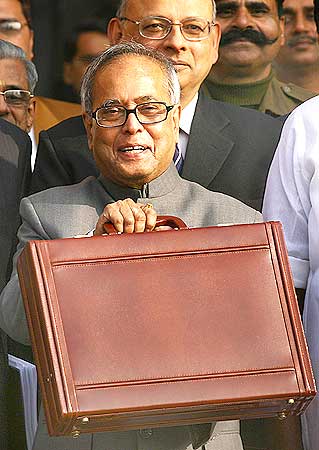
Budget: Here's what the common man wants

Indrani Roy Mitra & Manu A B in Kolkata and Mumbai

The Union Budget is the annual financial statement of India presented every year on the last working day of February. The Budget is laid before both the Houses of Parliament (Lok Sabha and Rajya Sabha).

This statement of accounts is valid for one financial year. The financial year starts on April 1 every year and ends on March 31.

The statement includes the estimated receipts and expenditure of the government of India for the financial year. With the Budget, being the most important financial event of the country, it is natural that common people have huge expectations from it.

What do people of India want this year's Budget to be? What are their needs?


From people who do not know who Pranab Mukherjee is or what the Budget means to industry veterans, we spoke to a cross section of the people from various walks of life to know their views about the Budget. Read on...
Click NEXT to know the view of the aam aadmi andindustry on Budget...

Source: Budget: Here's what the common man wants - Rediff.com Business

Tuesday, February 8, 2011

‘Study of all power plants essential’ - Mumbai - DNA

Only the combined study of all the proposed power projects on the Konkan coastal belt, will give the real picture of the possible impact on the environmental of these plants, says the Bombay Natural History Society (BNHS).

The 200-km-long Konkan coastline is expected to have around 15 thermal power plants, with a capacity of around 23,000MW. Adding to that will be the much controversial Jaitapur Nuclear Power Project, which has capacity of 9,900MW.

“This is not the question of one nuclear power plant. When you have such a huge number of projects coming up, you have to study the impact in totality. If you see the proposed plans on map, there is no open space available in the belt of 200km from Dabhol to Sindhudurg. Plus, all these projects will be releasing hot water in to the sea, which will increase the seawater temperature,” said Dr Deepak Apte, deputy director, conservation.

He added that the rising temperature does alter the present ecosystem and increase the number of newer species. “It is good for some species, but not for others. Therefore, we feel that all the projects should be studied in a combined manner to reach a conclusion,” said Apte, adding that had there been a single project, then an isolated study could have helped.

BNHS also released its interim report on the impact of oil spill, which took place after the collision between two vessels namely MSC Chitra and Khalijia in August 2010.

The report claims that the spill has harmed the mangroves spread over the 1,273.24-hectare area, which is almost 60% of the total mangrove cover in and around Mumbai. It also says that the regeneration process of mangroves has stopped because of the oil cover.

Source: ‘Study of all power plants essential’ - Mumbai - DNA

Subscribe to Extraminds feeds

NDTV News - Top Stories

Latest Happenings all around the world Headline Animator