Showing posts with label india win world cup 2011. Show all posts

Wednesday, April 6, 2011

Kalmadi should've been sacked a year before CWG: Shunglu panel

NEW DELHI: The Centre's decision to depute a chief executive for the Commonwealth Games was too little and too late as Suresh Kalmadi should have been sacked a year before the event, the V KShunglu committee has said. 
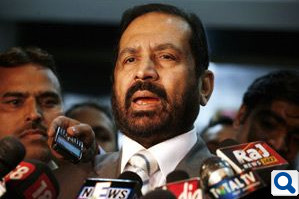
Dubbing as totally inadequate ex-sports minister M S Gill's September 25, 2009 advice to PMManmohan Singh that handpicking a CEO and a set of officers was the "essential minimum", the committee said, "Nothing short of the removal of Kalmadi could resolve the issue." 

In its final report on governance issues, the panel starkly said, "The question then is was it not obvious to the government that nothing short of Kalmadi's removal would resolve the issue. Confrontation (2006-08) had failed, cooperation had led to no improvement (2008-09). There was no choice but to sack Kalmadi. "In his letter, Gill had said, "I have had intensive meetings with Kalmadi and Randhir Singh, the secretary general, Delhi CM, the cabinet secretary and T K A Nair. We have devised a line of action to strengthen the OC management immediately. The structure cannot be changed, but this is the essential minimum now, with no time to lose." 

Indicting the sports ministry, the panel said, "The department of sports had failed, and at some level was complicit." In fact, so inefficient was the budget planning and expenditure estimates that in the end only Rs 3,188 was left unspent. Although the panel said that deputing a retired PMO hand Jarnail Singh as CEO did not help, it had a good word for officers like Jiji Thomson and Sanjeev Mittal, who held charge of catering and ticketing in the face of Kalmadi's hostility. 

It is interesting to find that the Shunglu committee's revelations indicate the decision against removing Kalmadi—as the "structure cannot be changed" remark indicates—was a result of discussions involving the PMO. 

The report said it was commonly known that the OC was ruled by "Kalmadi and his cabal". According to it, Kalmadi called the shots or authorized certain henchmen to do so. "The numerous drawbacks in the organization of the Games and the excessive cost are attributable to his flawed decisions." 

Going back to when the BJP-led NDA was in power, the panel blamed the party's erstwhile Bhopal MP and former sports minister Vikram Verma for not pressing Kalmadi on his claims to deliver a revenue neutral Games. "Commencing February 2003 to the end of that year, Kalmadi and Verma shared a warm relationship," the report said. 

The Shunglu committee, whose detailed and well documented reports have sparked off a deep unease in the government, pointed out that the Jaipal Reddy-headed GoM set up to oversee the Games had failed to deliver. "Even if an oversight role was contemplated for the GoM, in practice it was unable to assert that role," it said. 

Looking at the GoM's record, the panel pointed out that it had failed to act on a sports ministry proposal to curtail the Kalmadi-led OC. "At the 13th meeting of the GoM (held on March 10, 2008), the youth affairs and sports ministry made a powerful plea for restricting the absolute power of the organizing committee by making a suitable amendment to the memorandum of the organizing committee," the report said. Noting that the reports to the GoM were scratchy, it said, "These (progress reports) are low on content and it is anybody's guess what is going on." The panel also pulled up the urban development ministry for its inconsistent supervision of Games-related projects like the Games Village where it acquiesced to a bailout for the builder. 

The panel felt the "implicit decision to conduct the Games through a private non-profit society was an error of judgment compounded by the personality of its chairman for whom the difference between fact and fiction was academic. Emergency measures ameliorated the situation but at a very high cost". 

Pointing out that a little over Rs 28,000 crore was spent on organizing the Games, which was a "galactic jump" from Rs 300–400 crore estimated in April–May 2003 and reiterated by Kalmadi in August 2003 prior to the Cabinet approval in September 2003, the committee said that at no stage was an overall budget prepared by the sports ministry or required by the finance ministry or Cabinet.

SC quashes MP govt land allotment to Kushabhau Thakre Trust

NEW DELHI: The Supreme Court today quashed the decision of the BJP government in Madhya Pradesh to allot land to a trust named after late party leader Kushabhau Thakre

A bench comprising Justices G S Singhvi and A K Ganguly cancelled the state government notification for alloting around 30 acres of land to the Trust whose trustees include senior party leaders L K Advani, M Venkaiah Naidu and Murli Manohar Joshi. 

The apex court directed the authority concerned to take possession of the land which was allotted on September 25, 2004 by the then Madhya Pradesh government headed by Uma Bharti. 

The court passed the order on a petition filed by Akhil Bhartiya Upbhokta Congress, a consumers' society registered in MP, challenging the government's decision on the ground that the land at Basvadiya village was given at a throwaway price to the Trust in violation of laws. 

The consumers' society had approached the apex court after the MP high court had refused to quash the land allotment.

Chinese along LoC? Top general sounds warning

NEW DELHI: A top Indian Army general has warned that India not only faces the threat from Chinese troops along the Line of Actual Control (LAC) with China but it could well extend to theLine of Control (LoC) with Pakistan due to the expansive Beijing-Islamabad military nexus. 

The massive build-up of Chinese military infrastructure all along the 4,057-km LAC, especially in the Tibet Autonomous Region, as well as the expanding Chinese footprint in infrastructure projects in PoK is by now well-documented. But this is the first time a senior Army commander has publicly expressed apprehensions about People's Liberation Armytroops actually being stationed along the volatile 778-km-long LoC between India and Pakistan. 

"It poses military challenges to India and not only along the Sino-Indian border but also along the LoC. And we hear many people today who are concerned about the fact that if there were to be hostilities between us and Pakistan, what would be the complicity of the Chinese. Not only because they are in the neighbourhood but the fact that they are actually stationed and present on the LoC," said Northern Army Command chief, Lt-General K T Parnaik, at a seminar in Jammu.

Tuesday, April 5, 2011

Delhi's population grows slowest in 100 yrs

NEW DELHI: Adding just 30 lakh people in the last 10 years, Delhi experienced its slowest population growth in almost a century. The decadal growth rate of 21% was less than half the figure of 47% for the previous decade. Census officials attributed this to a combination of declining fertility and mass slum demolitions. 

Provisional district-level data released by Varsha Joshi, director of census operations for NCT, on Monday said this is the lowest decadal growth rate since 1921. 

The population of 1.68 crore is therefore also much less than the 1.85 crore projected for 2011 after the 2001 census. "It is time to stop thinking in terms of over-population. Delhi's population is stabilizing... and the focus now needs to be on delivering services to the people," Joshi said. 

However,with the population of major cities in the larger urban agglomeration — Gurgaon, Faridabad, Noida and Ghaziabad — expected to post a large increase, 'greater Delhi' is likely to have grown much faster than these numbers suggest. Slums gone, people moved out Displaced & Missing Only 32,000 families have been relocated in rehabilitation colonies in Northwest and South districts. 

The slowdown is also attributed majorly to the drop in fertility rate Delhi has experienced its slowest population growth in almost 100 years; but 'greater Delhi' or the NCR region may have seen a substantial hike in population. Since these satellite cities come under Haryana and Uttar Pradesh, which are yet to release their district-level data, the picture of the urban sprawl's growth as a whole remains incomplete. 

Within Delhi, the population of the two smallest districts in the heart of the NCT – New Delhi and Central Delhi – has declined sharply by 25.4% and 10.5% respectively. This means that New Delhi lost a quarter of its population over the last 10 years, while Central Delhi lost over a tenth. 

This trend was seen in Mumbai city, too, which experienced a 6% drop in its population. New Delhi and Central Delhi are, however, Delhi's smallest districts in terms of population. New Delhi, which extends from the edge of Jhandewalan in the north to Chanakyapuri in the south, houses most of the city's government buildings and has a resident population of just 1.3 lakh. 

Central Delhi extends from Karol Bagh in the west to the Yamuna and includes Old Delhi. Joshi attributed the fall to the removal of slum settlements and the consequent displacement of poorer residents. 

New Delhi's population declined once in the past between 1971 and 1981, but at a much slower rate.

Central Delhi's population, meanwhile, has been dropping every decade since 1971. Where the core is shrinking, the periphery is expanding. 

The fastest growing district was South-West Delhi, which adjoins Haryana and includes Najafgarh, Dwarka, Dhaula Kuan, R K Puram, Vasant Vihar and Delhi cantonment. The new sub-city of Dwarka is a major growth pole here, as is Najafgarh. 

The next fastest growing district is also Delhi's largest, North-West Delhi, which includes Narela, Alipur, Mangoplpuri, Wazirpur and Rohini. This district is the largest in size and also has the largest population, 36.5 lakh. It is home to several rehabilitation colonies of people displaced from elsewhere in the city as also industrial estates. 

In every district, though, the growth rate is less than it was in the previous decade. This slowdown could largely be attributed to a fall in fertility – the proportion of population in the 0-6 age group has fallen from 14.56% in 2001 to 11.76% in 2011. This is in line with a generalized decline in fertility in most of the country. 

Such is the fall in fertility that Delhi's 0-6 population has declined in absolute terms too by 46,000. Joshi also attributed the fall to the removal of slum settlements in the Yamuna-Pushta belt, Gautam Nagar and Kalka Mandir as well as from various parts of the city during the run-up to theCommonwealth Games. Of the several lakh people displaced as a result of these demolitions, only 32,000 families, or 1.5 lakh people, have been officially relocated in rehabilitation colonies in the North-West and South districts. This leaves lakhs of people unaccounted for. They may have settled in slums elsewhere or may have left the city, Joshi said. 

Another trend that affected population was the conversion of residential areas into commercial ones, thus using up housing stock, most visible in Old Delhi and Karol Bagh, Joshi said. As a result, long-time residents were moving to more distant parts of the NCR, she added. Delhi's population density rose from 9,340 persons per sq km in 2001 to 11,297 persons. This is still far behind other metros like Mumbai, where it is well over 20,000 people.

Lashkar bid to attack World Cup final posing as scribes averted

NEW DELHI: Barely a week before the cricketWorld Cup final match in Mumbai, a foreign intelligence agency had alerted India stating that the Pakistan-based terror group Lashkar-e-Taiba (LeT) had managed to get forged passes and fake identity cards — issued to journalists and corporate sponsors — for the title clash at the Wankhede Stadium on April 2. 

The alert had prompted the Union home ministry to send additional paramilitary forces to Mumbai to take additional care while frisking spectators and checking authenticity of passes\identity cards. A number of CISF personnel were deployed at all entry and exit gates in addition to hundreds of Mumbai Police personnel for multiple frisking. 

A senior official here said, "After getting the input that the LeT militants might try to enter the stadium posing as journalists or sponsors, the Centre immediately shared the information withMaharashtra government and other agencies concerned, leading to deployment of additional security forces, including CISF personnel and NSG commandos". 

Subsequently, the home ministry sent an additional secretary-rank officer to Mumbai to review the preparedness of security personnel in view of those inputs that were received last Monday. "Multiple frisking was planned in addition to checking buyers of internet tickets by tracing IP addresses of each and every computer used make the purchase," said the official. 

Sources said, as per security plans, anti-aircraft guns were strategically placed. All air bases near Mumbai, Navy and Coast Guard were put on high alert to ensure security in the air and sea during the match. Quick reaction teams and women personnel of CRPF were also stationed at vital locations in and around the stadium to respond to any exigency, they added.

US death row injection comes from Mumbai firm

MUMBAI: Correctional services in the US are buying sodium thiopental from a little-known firm in Borivli (West) for use in lethal injections to execute death sentences. 

Kayem Pharmaceuticals Pvt Ltd, at Marian Colony, shipped a 500-gram consignment of the yellow powder, packed in a hefty 25-kg strongbox, on December 8, 2010, to the Nebraska department of correctional services. Sodium thiopental is generally used along with pancuronium bromide and potassium chloride to create a cocktail with which several states in the US carry out the death sentence by lethal injection. In February this year, Kayem sold another consignment to the South Dakota department of corrections. Executions are yet to be carried out by Nebraska or South Dakota with the drug purchased from Kayem. 

Sodium thiopental has been in short supply in the US for about a year after the sole American company that manufactured it ceased production. That has forced American prisons to look abroad. For Nebraska and South Dakota, that search led to the residential Greenfield Cooperative Housing Society in Borivli (West), where Kayem is located. Kayem is a two-room set-up — office and storeroom — with a balcony that doubles as a kitchen. 

American prisons have taken flak for purchasing sodium thiopental, used in lethal injections, from overseas. An earlier purchase from the UK apparently degraded by the time it reached American shores, said Clive Stafford Smith, director of Reprieve, an international charity assisting people around the world facing the death penalty. "The failure of the sodium thiopental purchased in the UK has thus far caused the excruciating and torturous death of three people, one in Arizona and two in Georgia," Smith said. 

That prompted a lawyer in Nebraska — where the execution of Carey Dean Moore, 53, is pending — to move court there against the use of the sodium thiopental bought from Kayem. There were also questions raised about whether Kayem is properly registered in the US. 

Officials in the Nebraska corrections department did not respond to queries emailed by this newspaper. However, replying to the court in the Nebraska case, state solicitor-general J Kirk Brown said: "The state of Nebraska has duly enacted a new statutory method of execution (lethal injection) and adopted an execution protocol pursuant to the statute, which together satisfy all currently understood requirements of our state and federal constitutions." 

Kayem, a small-scale Indian company, may now be in a position to increase its business. "Several American states have now approached us for sodium thiopental," said Navneet Verma, director, Kayem Pharmaceuticals. Verma said he sold the first consignment of 500 grams to the Nebraska correctional services at $3.50 a gram. That works out to $1,750, or around Rs 78,000. When officials at the South Dakota department of corrections evinced interest to buy the same drug, Kayem jacked the price up to $10 a gram. 

Derived by mixing sodium and thiopentone, the drug sodium thiopental doesn't really require a huge facility to manufacture and goes for around Rs 35 a gram in the Indian market.

2G scam: 'Candid' Tata admits chemistry problem with Maran

NEW DELHI: Tata Group chief Ratan Tata and corporate lobbyist Niira Radia deposed before the parliamentary Public Accounts Committee probing the 2G scam on Monday, leaving its members feeling that while Tata had been "candid" in his deposition, Radia was "evasive." 

Tata admitted before the committee his group had a "chemistry problem" with ex-telecom minister A Raja's predecessor, Dayanidhi Maran. He indicated that things indeed improved after Maran was replaced by Raja in May 2007, but denied having been part of an effort to ensure Raja became telecom minister again in 2009. He added, "I didn't manipulate the system for 2G license allocation." 

On being asked about his letter to DMK chief and Tamil Nadu chief minister M Karunanidhi praising Raja's stewardship of the telecom ministry, Tata said, "We had a chemistry problem with Maran." He pointed out that Tata Teleservices' applications were kept pending for more than 80 days and he had, in fact, been disadvantaged as GSM operators seemed to enjoy more clout. 

His claim that there was no controversy about spectrum allocation when he wrote to Karunanidhi was, however, challenged by committee members who said the decision to shift the cut-off date had been taken and finance ministry as well as Prime Minister Manmohan Singh had already written to Raja by then. 

BJP leader Yashwant Sinha told Tata that it would have been unexceptional if he wrote to the Prime Minister but instead he sent a letter to Karunanidhi showering encomiums on Raja. Tata is believed to have said the letter was carried in a sealed cover by Niira Radia. "I did not leak it, it did not benefit me," he is learnt to have said. 

Niira Radia was questioned by the committee on her taped conservations which suggested she had mounted a concerted campaign efforts to re-install Raja as telecom minister in May 2009. Radia replied saying she was "too small a fry" to influence ministerial appointments. 

Radia, who met the committee before Tata, is learnt to have drawn a warning from PAC chair Murli Manohar Joshi when she said some of the leaked tapes on her conversations with Raja, Karunanidhi's daughter Kanimozhi, Tata and other industrialists and journalists, were "doctored". Asked to substantiate her claim, she said the tapes were with the CBI. 

Joshi is understood to have warned her to choose her words carefully as her deposition to a committee can be a matter of privilege. Asked why she had not filed a legal case if the tapes were tampered, Radia said she was waiting for further CBI chargesheets. In a bid to correct herself, she said the context of her conversations was often not clear. 

With Joshi later telling the media that Radia was "evasive", it appears the lobbyist did attract the ire of members. She said her work was both public relations and communication and it involved listening to what people had to say and conveying this to her clients. She is learnt to have often said that she did not remember what exactly transpired. 

Tata, however, said the tapes were genuine and he recognized his voice. On the land deal involving Voltas, Tata said his firm was a tenant. 

Asked by Congress's Saifuddin Soz whether price of 2G spectrum involved a loss of revenue, Tata did not respond directly. He said revenue sharing and upfront payment, as suggested by Soz, could be options but different formulas have worked in different countries. He said rather than being a beneficiary, Tatas had suffered in the past. 

Tata said he had met Radia when he was trying to create a Tata tie-up with Singapore Airlines. He admitted that he felt Radia would give him a voice in Delhi where the GSM telecom operators seemed to enjoy an advantage. He claimed firms like Vodafone and BSNL had got spectrum in excess of their rights. 

On Radia, Joshi said, "Our experience was that she did not come out clearly. Regarding the tapes first she tried to be evasive giving various excuses. Later when PAC confronted her saying she had already appeared before the CBI, she accepted that she had heard some of the tapes and they were genuine." PAC has now asked her to submit a list of tapes that she has already heard. 

On Tuesday, Anil Ambani, senior officials of Etisalat, DB group, S Tel, and Unitech Wireless are set to appear before the PAC.

Monday, April 4, 2011

Another record? 68 million watched World Cup final

NEW DELHI/MUMBAI: Team India's victory at Wankhede will not only go down in history as one of the greatest cricketing victories for the country, but also as one of the most viewed sporting events on television ever. 

An unprecedented 67.6 million people watched the gripping final that had most Indians at the edge of their seats. The number of viewers on Saturday—according to the data collated by audience measurement agency aMap—has surpassed the Indo-Pak semi-final that was perhaps the most anticipated match of the tournament for the subcontinent audience. The number of viewers for the semi-final was 67.3 million. The other semifinal—Sri Lanka vs New Zealand—paled in comparison with only 32 million viewers. 

Incidentally, TRP viewership for India matches leaped from 3.7 before the quarterfinals to 6.4. About 53 million watched the India vs Australia clash in the quarter-finals. aMap vice-president Jinita Shah said, "Yesterday's viewership broke all records. Every Indian was glued on to TV to see the big win. Viewership increased almost four times on Saturday.'' According to aMap, 64% of cable and satellite homes watched the Men in Blue clinch the World Cup. The average viewership rating for the final was 13.6, which peaked at 21.4 during the end of the match—higher than the high-voltage Indo-Pak encounter at Mohali. However, most industry watchers will wait for the TAM ratings that most media agencies subscribe to for a full analysis. 

The aMap data, though, is an indication of the unprecedented viewership that the final clocked. The average time spent recorded on the match was an impressive 187 minutes. 

"The World Cup finals will break all records possible as far as cricket viewership or any other programme in recent times is concerned. Peaks could touch ratings of 40 and average would be higher than 30. Considering India won and it happened in India while the contests were well fought, this World Cup has given the sponsors the biggest returns compared to other years," said Ajit Varghese, MD of Maxus, which bought media for brands like Vodafone, Fiat, Nokia and Hero Honda among others.

Subscribe to Extraminds feeds

NDTV News - Top Stories

Latest Happenings all around the world Headline Animator